How to Help Luxury Boats Hold More of Their Value

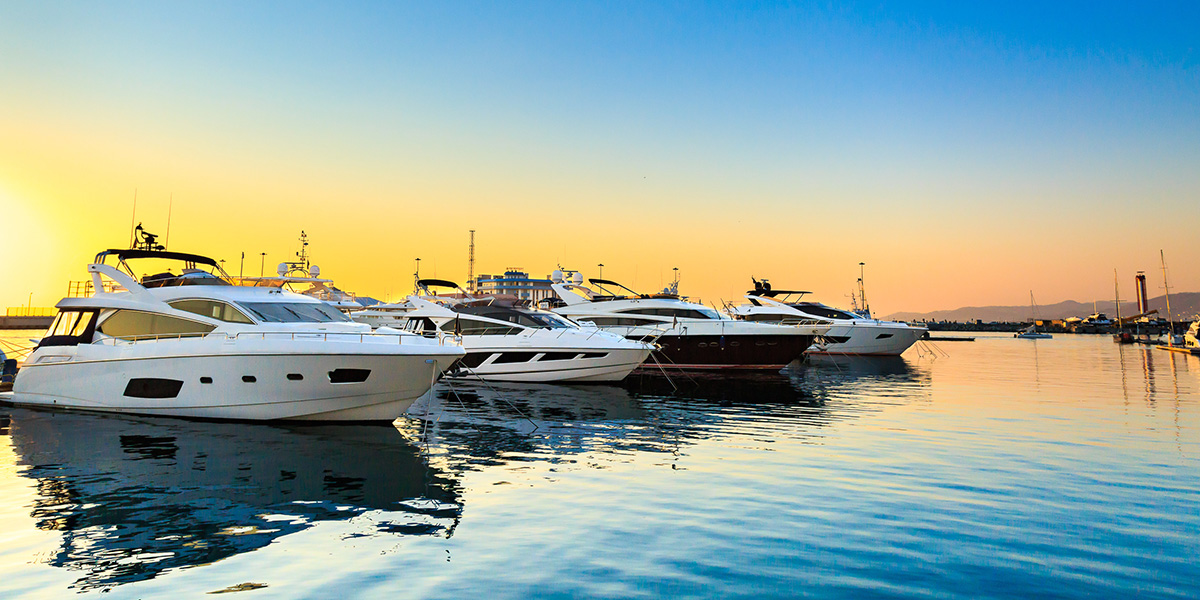
A boat is more than just a boat for most owners. It’s the setting for family vacations and holiday weekends. It serves as a platform for fishing trips or watersports adventures with friends. People use it as a welcome respite from the demands of everyday life.
Yet, no matter how much a member of the family it might be, a boat is also an asset. That’s especially true if it’s a luxury model, so it’s fair to ask if it will hold its monetary value over time.
The short answer is no. Like cars, RVs, and other luxury vehicles, boats are depreciating assets, and they lose value as they age. That doesn’t mean all boats depreciate at the same rate, or that owners have no control over how much value their boats retain.
If you’re shopping for a luxury boat, or if you already own one you love, understanding what drives depreciation can help you protect your investment as much as possible.
Understanding the Depreciation Curve on Luxury Boats
You won’t find a single formula for determining how quickly a boat will depreciate. Age, condition, brand, equipment, market demand, and even location can affect what a particular boat is worth. That said, some broad averages provide a useful starting point.
According to J.D. Power, most used boats lose approximately 10 per cent to 20 per cent of their value after the first year. After five years, the number is 20 to 30 per cent, and by year 10 a boat has depreciated 30 to 40 per cent. Depreciation slows after that point, and the boat’s condition and maintenance history become increasingly important factors in determining its value.

A 2026 BoatU.S. analysis describes the pattern as an S-curve, with a sharp initial decline followed by a period of slower depreciation. Beyond that, aging machinery, deteriorating materials, and potential restrictions on insurance coverage can put additional downward pressure on the value of boats in their teens and 20s.
Depreciation isn’t necessarily a straight line. At every point along that line, some boats will fare better than others.
Consider Buying Pre-Owned Luxury Boats
If you haven’t purchased your luxury boat yet, you have a simple way to reduce the financial impact of depreciation: let someone else absorb the steepest part of it. Because depreciation tends to be greatest during the first few years of ownership, a well-maintained used boat can offer significant value. You won’t have the experience of ordering a brand-new vessel exactly to your specifications, but you might be able to acquire considerably more boat for your money without taking that initial depreciation hit yourself.
The pre-owned market is substantial. According to the National Marine Manufacturers Association, 867,059 used boats changed hands in the United States in 2025, representing $10.8 billion in sales.
Age alone doesn’t make a used boat a good value, however. Before you buy, investigate its maintenance and ownership history, engine hours, onboard systems, and overall condition. And invest in a professional marine survey.
The goal isn’t to find an older boat. It’s to find a good older boat.
Choose a Brand with Staying Power
If resale value matters to you, think beyond the boat sitting in front of you today to the boat you may try to sell later. Consider how prospective buyers might view it in five or 10 years. Brand reputation and construction quality play an important role in value retention. BoatU.S. identifies both as important factors, particularly for brands that have developed loyal followings.
A well-established manufacturer that is still in business and continues to support older models will make it easier for future owners to source parts, troubleshoot problems, and maintain their vessels. Conduct research on older models to see if they are still sought after on the brokerage market. Look for active owner communities and see how readily available parts are.
A strong resale market doesn’t guarantee what your boat will be worth years from now. It does, however, provide useful information about how a brand ages in the marketplace.
Think About the Next Buyer
Your boat should suit your family’s needs and tastes first and foremost. After all, you’re the ones who will be using it. But if protecting a boat’s resale value is a priority, it doesn’t hurt to keep the next owner in mind — even when you’re buying.
Highly personalized features, unusual layouts, and trendy design choices might be perfect for you, but they could narrow the pool of future prospective buyers down the line. More versatile layouts, timeless styling, and equipment with broad appeal can make a boat easier to sell.
That doesn’t mean you shouldn’t make your luxury boat your own. Just consider whether that expensive customization will add value for future buyers or whether you’re comfortable absorbing that cost because it adds value to your time aboard rather than a future sale price.
Prioritize Maintenance
You can’t stop your boat from getting older, but you can influence how it ages. J.D. Power notes that condition and maintenance history become increasingly important in determining value over time.
Follow manufacturer-recommended maintenance schedules for engines, generators, and onboard systems, and address any problems promptly. Stay ahead of cosmetic deterioration to upholstery, canvas, woodwork, paint, and gelcoat. And when the boat isn’t in use, store and protect it properly to help preserve its condition.
Keep detailed service records and receipts for repairs and improvements. Share them with prospective buyers as evidence that you have properly cared for the boat. Thoughtful upgrades, such as newer electronics or refreshed upholstery, may help an older boat remain competitive.
Be strategic about this. For example, replacing obsolete or deteriorating equipment can remove potential objections from buyers even if you don’t recover every dollar you spend.
Slow the Effects, Enjoy the Value
Ultimately, depreciation is part of luxury boat ownership. But choosing carefully, maintaining it well, and keeping an eye on its future resale appeal can help slow its effects.
And in the meantime, you get to enjoy the value that matters most: your time on the water.
Heather Steinberger
You might also like


