You’ll Want to Catch These Florida Inland Fish

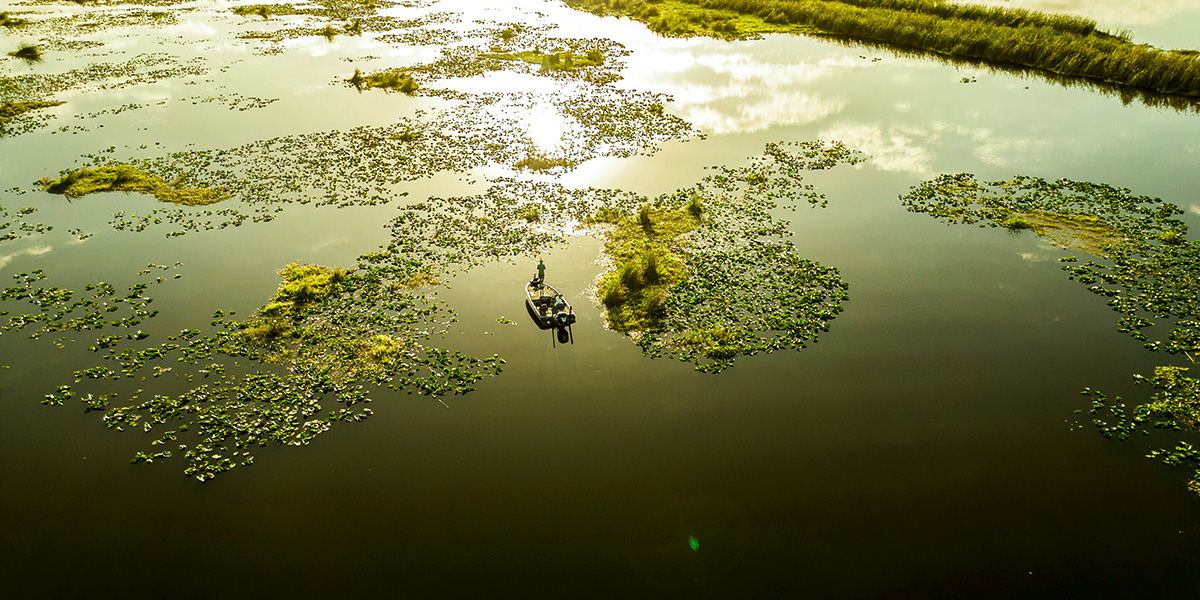
Florida’s coast gets the postcard treatment, but freshwater fishing in Florida offers more technical variety than the usual “bass and bream” shorthand suggests. An inland trip can mean punching hydrilla, holding a crappie jig at a precise depth over timber, or burning a jerkbait through a Miami canal shadow. These five Florida inland fish reward distinctly different reads of habitat, forage, and seasonal movement.
All of them can provide table fare, but you should check harvest rules and waterbody-specific consumption advisories before keeping fish.
Florida Bass
This fish was long called the Florida largemouth and is now recognized by the Florida Fish and Wildlife Conservation Commission as the Florida bass. Florida bass and largemouth bass remain grouped for regulations because anglers cannot reliably separate them by appearance.
Anglers will find Florida bass statewide, with central and south Florida’s shallow, productive systems providing the classic grass-fishing experience.
Treat vegetation by architecture. Punch topped-out hydrilla or hyacinth with a compact bait behind 3/4- to 1 1/2-ounce tungsten on 50- to 65-pound braid. Along a clean eelgrass or maiden cane edge, switch to a swimming worm, paddletail, or lightly weighted stickbait that tracks above the canopy. Shell bars, canal mouths, and wind-blown grass points gain value when they concentrate shad or shiners.
Bass have firm, mild fillets, but large predators accumulate more mercury. Selectively harvest smaller legal fish only where current guidance allows and release trophy fish.
Butterfly Peacock Bass
Butterfly peacocks turn South Florida’s drainage grid into a run-and-gun fishery. Their core range is the warm canal network of Miami-Dade and Broward counties. The Lake Ida-Osborne system adds opportunity in Palm Beach County. Cold water limits their distribution, and they feed almost entirely during daylight.

Skip the slow bottom-contact largemouth program. Target bridge shade, culverts, canal intersections, dead ends, and isolated hard cover. A free-lined shiner remains a high-percentage presentation, but a 3- to 4-inch jerkbait, compact topwater, or marabou jig retrieved aggressively will trigger territorial fish. A 7-foot medium-light spinning rod, 10- to 15-pound braid, and an abrasion-resistant leader fit the open water and sharp canal structure.
Peacocks make good eating. FWC encourages anglers to release larger fish and currently limits harvest to two daily, with only one longer than 17 inches.
Black Crappie
Florida anglers call them specks, and the key distinction is that black crappie spend more time offshore than most panfish. Lake Talquin, Lake Monroe, Lake Okeechobee, and Lake Trafford support serious fisheries. Anglers will find black crappie concentrated during winter and early spring before the shallow spawn.
Depth control beats constant lure changes to catch these Florida inland fish. Find suspended schools beside channel edges, timber, brush, or open-water bait, then hold a 1/32- to 1/8-ounce jig or live minnow slightly above the marks. Four- to 6-pound line preserves fall rate and telegraphs light bites. Long-line trolling searches broad flats efficiently; vertical presentations take over once electronics isolate a school.

Crappie are first-rate table fish, but local rules matter. Lake Talquin, for example, has a 10-inch minimum.
Redear Sunfish
Shellcrackers are hard-bottom specialists rather than oversized bluegills. They feed heavily on snails and small clams and often hold deeper along shell, sand, or gravel beside vegetation. Merritt’s Mill Pond, the St. Johns system, and many central Florida lakes produce quality fish.
The peak window commonly follows the March and April full moons. Use side imaging to locate clean depressions or shell seams, then drag half a nightcrawler on a number 6 hook behind a 1/8- to 1/4-ounce sliding sinker. A 12- to 18-inch fluorocarbon leader keeps the bait near bottom without deadening it. Move the rig by inches; redear commonly pin food to the substrate rather than chase it.
Their thick, mild fillets make shellcrackers one of Florida’s better fish-fry targets.
Sunshine Bass
The sunshine bass is a hatchery-produced cross between a female white bass and male striped bass. FWC stocks it in shad-rich waters including Edward Medard Reservoir, Tenoroc, Lake Santa Fe, and parts of Harris Chain. It behaves like an open-water predator, schooling and feeding hardest around low light, current, and compressed bait.
Start with electronics, birds, and surface disturbance instead of shoreline cover. Troll shad-profile crankbaits, spoons, or small swimbaits until a school reveals itself, then switch to vertical jigs or live threadfin shad. Keep the presentation above the fish; hybrids commonly feed upward and may ignore a bait below the school. Medium tackle and 10- to 15-pound line preserve the fight without sacrificing control.
Bleed and ice a keeper quickly and then trim the dark lateral meat for cleaner flavor.
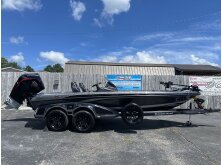
The quest for these Florida inland fish rewards specialization from your bass boat or multi-species rig. Match the presentation to where the fish actually lives—inside a grass mat, over suspended bait, on shell, or beneath canal shade—and the state becomes much more than a largemouth destination.
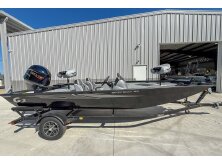
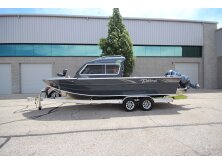
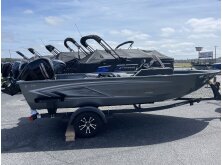
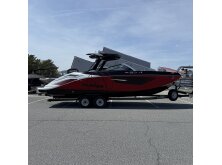
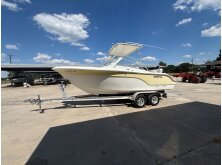
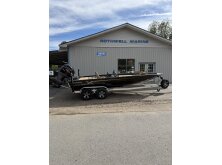
Find Fishing Boats in the Marketplace

 David Schlake
You might also like


