What Does the 10 Percent Rule for Boat Maintenance Really Mean?

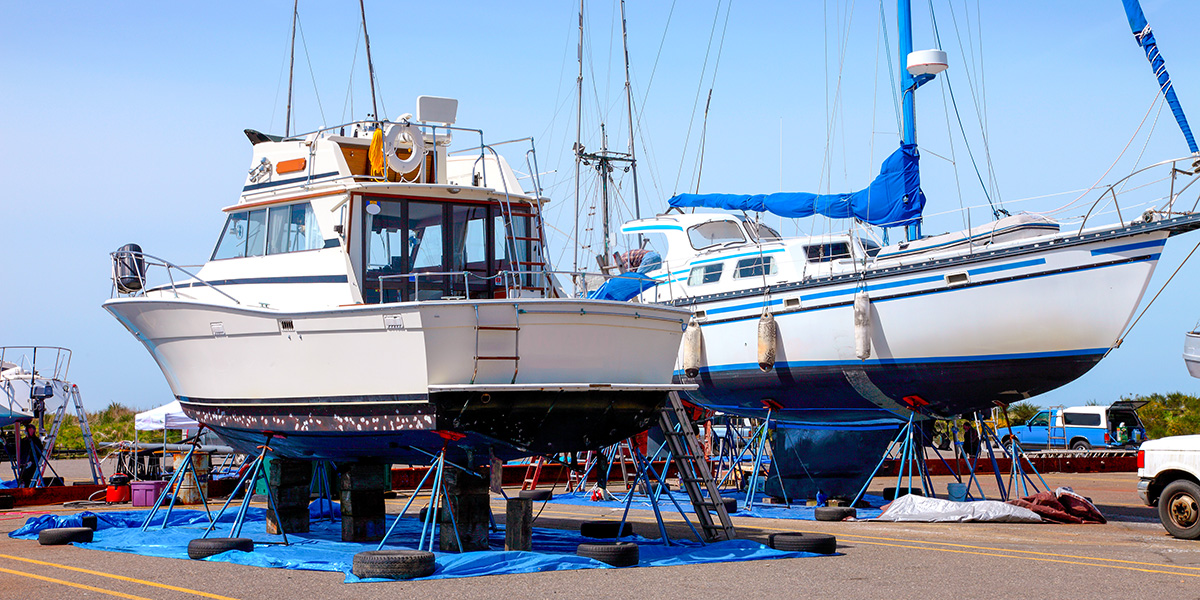
An old mariner’s saw states that you can expect to spend up to 10 percent of your boat’s value every year on maintenance. It’s repeated so often, it’s almost gospel: the 10 percent rule.
Given that new powerboat prices average about $185,000, the 10 percent rule gets expensive fast. Not everyone buys it, though. Consider Amanda Latham, owner of Man O’ War Marine in Fort Lauderdale, Florida, among the skeptics.
“I think a lot of salesmen say that because they don’t want to hear angry calls from a customer when they start seeing the maintenance bills,” Latham said.
Let’s look at some of the thinking behind the 10 percent rule for boat maintenance and dispel some misconceptions about it.
Are Price Tag and Maintenance Inextricably Tied?
The amount you spend on maintenance shouldn’t be based on a boat’s selling price, but rather on how much time you log operating the vessel. Latham calls it “pay to play,” and it makes perfect sense. A boat that is used more will inevitably cost more to maintain.
A consumer who puts 50 hours a season on their boat might need to service it once a year. A charter operator, on the other hand, might need to service the boat quarterly, depending on the workload.
“If they’re putting 300 hours on it, running wide-open throttle instead of idling all the time, you’re going to expect more maintenance,” Latham said.
Even with regular engine service, storage fees, and the cost of keeping the boat clean, it’s still hard to reach the 10 percent mark. Latham, whose shop is a certified Mercury Dealer and Service Center, said modern outboards are more reliable.
“If everything is running great, maintenance costs should be minimal,” Latham said.
Does Maintenance Get Cheaper as the Boat Ages?
As a boat’s value depreciates, maintenance costs tend to climb. This runs counter to the 10 percent rule itself, which would suggest owners spend less money over time, not more.
When an outboard is under warranty, the manufacturer covers defects in materials and workmanship. Some extended warranties offer up to eight years of coverage, with the boat owner responsible for oil changes and standard service intervals. If a sensor fails or fuel injector needs to be replaced, the manufacturer covers it.
Latham said the warranty period is an ideal time to set money aside in anticipation of future repairs.
“You might not see a bill for anything outside of your service intervals for two, three years,” she said. “Outside of the warranty, that’s when maintenance bills become more unpredictable.”
Boaters will often repower before the warranty expires, keeping the power package under continuous warranty.
Can DIY Maintenance Cut Costs?
Some independent mechanics steer clear of boats with a history of owner maintenance, unsure of what problems might be hiding underneath. Many times, that earlier work, no matter how well-intentioned, catches up with the boat.
To maintain the warranty, boat owners must follow the factory service schedule. Do-it-yourselfers have no way to prove the work was done, let alone correctly.
“Even before we open our ratchet set, every Mercury dealer has to do an engine report,” Latham said. “We scan the motors. Customers don’t have that ability. They are not legally licensed to have access to that software.”
Routine maintenance must be performed according to the schedule in the service manual to maintain the warranty. Deviate from the service schedule and any warranty claim could be denied. While engines have never been simpler to operate, they are more complicated to work on.
“The question is do you want to save a couple of bucks and potentially open yourself to warranty issues,” Latham said. “Or do you want to have peace of mind at night and spend a little extra money.”
Do All Boats Have the Same Maintenance Ceiling?
Modern boats are packed with technology, including gyroscopic stabilizers, air conditioning, and entertainment systems, from stereos to satellite internet. With all that technology comes the potential for more problems.
“If you have more bells and whistles, statistically your maintenance costs are going to be higher,” she said. “If it just has a stereo system and a bilge pump, then you only have to worry about your engines.”
Customers will sometimes assume an unrelated issue such as air conditioning trouble is caused by the engine.
“We see this constantly: bad batteries, bad fuel, and then the customer gets upset it’s not covered under warranty,” Latham said. “That’s the owner’s responsibility. That’s how people get ensnared in big costs that are not covered by warranty.”
How Do You Actually Hit 10 Percent?
The surest way to exceed the 10 percent rule is to defer or neglect routine maintenance. Skip service intervals long enough, and small problems potentially turn into expensive ones. The owners who skip the upkeep are usually the ones with higher repair bills.
Boats operate in a harsh marine environment, so it’s going to require work to maintain them.
“Maintenance still matters,” Latham said. “Whether it’s a house, a car, a boat, or an ATV, you have to do maintenance.”
Gregg Mansfield
You might also like


