Make the Most of a Week on Florida’s ICW

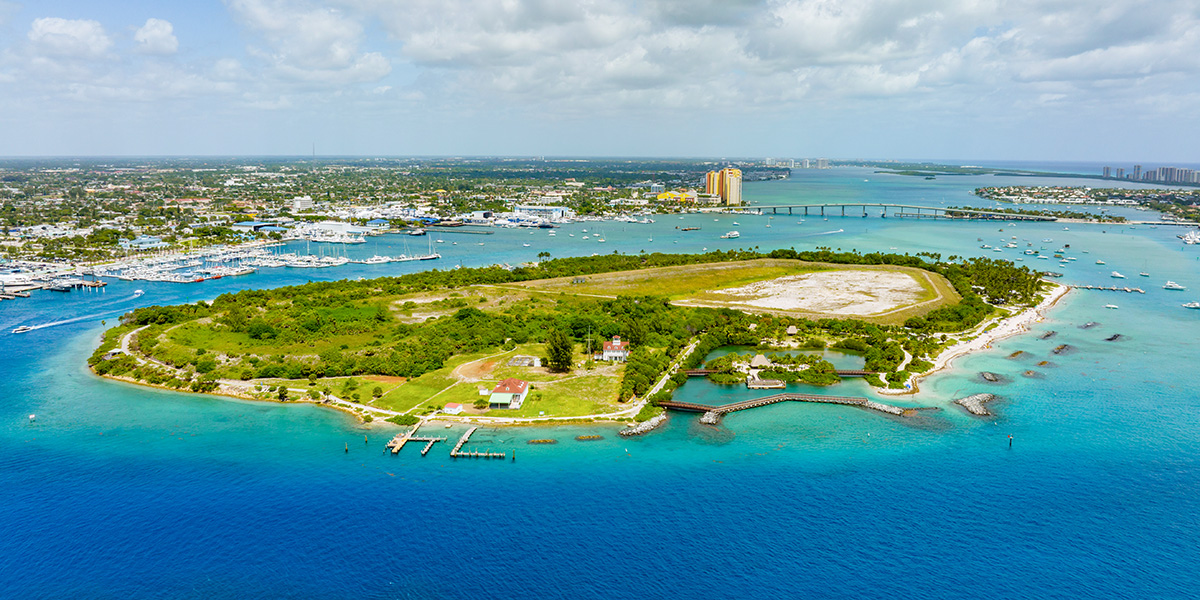
Although notorious as a busy boating thoroughfare, Florida’s ICW offers stretches of remarkable natural beauty. And it’s all hidden in plain sight. Picture-perfect sunsets melt into a watery horizon of pink and purple. If you stop to listen, you might hear a manatee break the surface for a brief puff of air or dolphins playing in the wake of your boat.
What makes the scene so memorable isn’t the moment itself, but the time we take to enjoy it. Let’s talk about how to make the most of a week on the ICW, for powerboaters and sailors alike.
Powerboats

South Florida is a treasure trove of dreamy boating destinations. If you go far enough south, you are rewarded with the Caribbean beckoning you to snorkel, dive, and even go lobster hunting. Let’s start at the northernmost destination and work our way to where the water reaches an apex of beauty and clarity.
First Stop
Peck Lake is a well-protected anchorage south of St. Lucie Inlet in the Hobe Sound National Wildlife Refuge. It is home to sea turtles, coral, Caribbean reef fish, and lobsters. After you drop the anchor, you can take a dinghy (or your boat) to the beach and walk through the dunes to the ocean. The view is grand and the ocean is surprisingly peaceful and quiet. From here, you can take your time moving south towards bluer waters.
Distance to next stop: 22 nautical miles
Second Stop
OK, let’s put peace and quiet on the shelf for a moment and head to West Palm Beach. Some of the prettiest water in all of the U.S. is here. The clarity is unbeatable. Manatees are around every turn. Baby coral grows right off the docks. Do not miss Peanut Island. This is a perfect anchorage for small powerboats. Shallow water surrounds the small pristine island. Suit up for swimming, snorkeling, and kayaking, or just wade around the clear shallows with a drink. But be careful around the island because massive container ships frequent the area, often appearing out of nowhere.
Distance to next stop: 10 nautical miles
Third Stop
Lake Worth Lagoon is a beautiful estuary in Palm Beach County. Ocean water flows in through two inlets and mixes with freshwater flowing through three major flood-control canals. It is an excellent spot for paddling, fishing, or just dropping the hook and admiring the city lights. Many anchorages along this stretch of the ICW offer stunning views of the skyline. The natural vantage point of the water showcases the city in a way that can’t be met on shore. The lagoon opens up into a broad expanse of water to give boaters plenty of room to spread out and enjoy the view. Few settings offer a more striking contrast between Florida’s urban waterfront and its natural beauty.
Distance to next stop: 63 nautical miles
Fourth Stop
No Name Harbor has everything to keep you busy all day and all night. The harbor sits inside Bill Baggs Cape Florida State Park at the tip of Key Biscayne. It offers something exceptionally rare for south Florida: a protected harbor surrounded by natural beauty. Once you step ashore, you have immediate access to beaches, picnic areas, wildlife viewing, and the Cape Florida Lighthouse. In the evening, this small harbor lights up with every color of the fluorescent rainbow as motorboats showcase their underwater light show. On the weekends, expect the party to extend well into the wee hours of the morning.
This location is also a very popular jumping off spot for the Bahamas. The anchorage fills up quickly, and it is a tight spot. If you plan to go, get there early to secure a spot in the harbor or along the seawall.
Fifth Stop
So where do you get to see Caribbean water for the first time? West Palm gives you a little taste, but the flood gates don’t really open until you get to Biscayne Bay, which showcases some of the prettiest water Florida has to offer. The entire body of water is a national park, and you can’t anchor anywhere inside the bay. But you can tie up to the seawall at Boca Chita Key, a tiny spit of land in the middle of the bay. This is one of my favorite places, with a historic lighthouse, an observation deck, and a hiking trail.
Buffer Day (or Two)
Whenever I’m planning a trip on the water—sailboat or motorboat—I like to reserve a day or two as a buffer. One of two things will happen. Either you will use that buffer for inevitable boating mishaps, or you will use it to explore a special place that caught your eye along the way. Either way, the journey itself will claim some part of your itinerary, so it is best to leave some space for it.
Sailboats

While I recommend south Florida’s ICW for motorboaters, I specifically do not recommend that area to sailors. Why? Because you will spend your entire week on the water waiting for bridges to open. Unless you can tuck your mast neatly into your back pocket, you should plan to skip that area entirely.
One option would be to go far enough south to skip the bridges and the motorboat traffic altogether and explore the Florida Keys. But the Keys require more than a week to get there and back. Instead, let’s head to the middle of Florida.
First Stop
Cape Canaveral in Florida is a unique boating destination, and well worth a visit. Where else can you enjoy excellent cruising waters and wildlife and watch a rocket launch into space? The Cape Canaveral Space Force Station launches about two rockets per week, so your chances of witnessing this feat of human ingenuity are pretty good.
Distance to next stop: 8 nautical miles
Second Stop
Cocoa Beach has it all: protected cruising waters, wildlife, beach culture, and easy access to a fun and laid-back town. Walk to a variety of locally owned restaurants or jog or bike along the waterfront. For wildlife exploration, bring a kayak, dinghy, or paddleboard to the Thousand Islands area behind Cocoa Beach.
Just one word of advice: Watch out for low-hanging powerlines just outside of the ICW channels, as they drop dramatically in places and sometimes we forget to look up.
Distance to next stop: 29 nautical miles
Third Stop
Sebastian Inlet is a gem, tucked away from the busy boating hustle farther south. It sits in front of one of the most biologically diverse estuaries in North America. Sebastian Inlet will usher you into a truly wild part of Florida. Bring your paddleboard, fishing gear, or kayak to fully explore a maze of tidal waterways.
Distance to next stop: 12 nautical miles
Fourth Stop
Vero Beach Municipal Marina in Vero Beach City Marina is a destination in itself. I spent an entire summer with my family on a mooring ball in Vero Beach and wanted for nothing…except air conditioning. The mooring field is one of the best in Florida, second only to Boot Key Harbor in Marathon.
Distance to next stop: 3 nautical miles
Fifth Stop
Fort Pierce is another refreshingly wild stop on Florida’s ICW. It has an appealing mix of small-town charm and natural beauty. Fort Pierce Inlet State Park was one of my favorite stops along Florida’s ICW. The beaches are pristine and the jetty is a fishing hot spot for hungry birds and eager humans.
Leave Room for the Unexpected
For all species of boaters out there, I recommend building a few buffer days into your itinerary. And speaking to sailors directly, you know all too well the unforeseen events that can eat up your time on the water. Weather, mechanical issues, tides, and bridges can rewrite even the best-laid plans.
Schedule some wiggle room in the itinerary and keep your trip on the water relaxed and carefree. Rushing is such a drag when you’re trying to have fun along Florida’s ICW.
Olivia de Soria