Stay Safe Night Boating on Tampa Bay

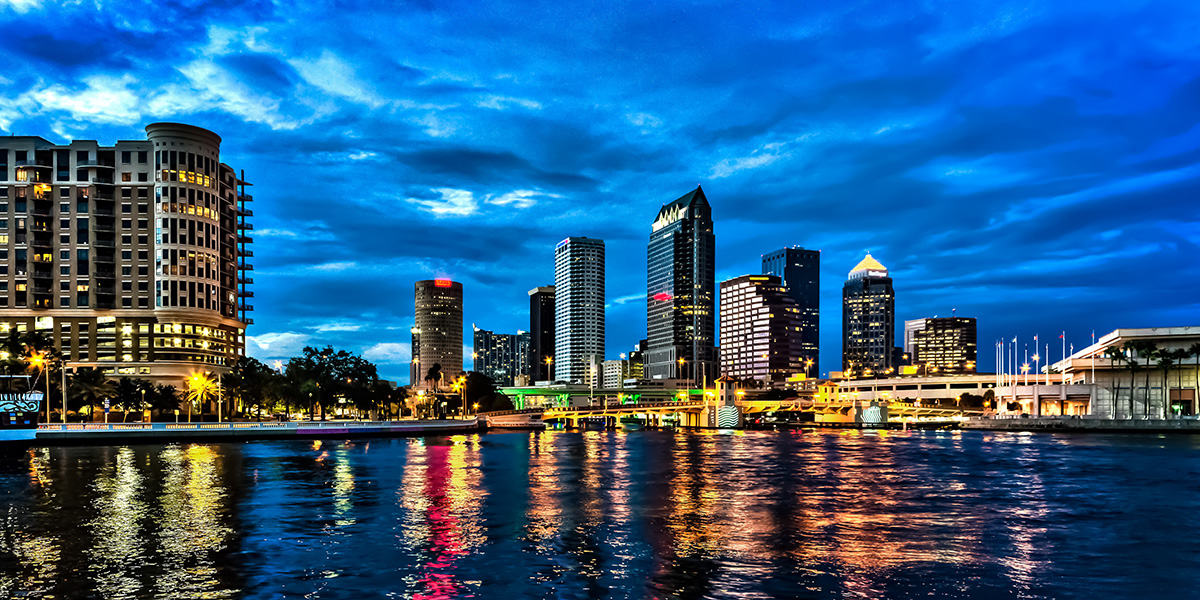
Night boating on Tampa Bay is challenging and rewarding. Because of the activity at Port Tampa Bay, commercial vessels use the bay for entrance and exit. There’s little room for error when navigating near the shipping lanes.
Because Tampa Bay is surrounded by restaurants, bars, marinas, and hotels, boat owners can find a lot to do. That also means you are sharing the waterway with other recreational boats, though. Perhaps many.
The sights of Tampa Bay are framed by spectacular bridges and stunning skylines that light up at night. The visual show is highlighted by the LED display on the Sunshine Skyway Bridge that offers a kaleidoscope of shifting colors.

Where to Run While Night Boating on Tampa Bay
Tampa Bay is enormous. No official boundary exists, but the entire navigable bay is open to recreational boating, making it one of the largest boating destinations on the Gulf Coast of Florida.
The surface area is about 400 square miles, about 40 miles from the north side to the southern entrance at the Gulf of Mexico, and spanning about 20 miles.
Boat owners have plenty of places to run, including the main bay, Old Tampa Bay, and Hillsborough Bay. Numerous rivers and tidal creeks are part of the ecosystem, as is the Intracoastal Waterway. Plus, boaters have direct access to the Gulf of Mexico through Egmont Channel.
Let’s put the size in perspective. A cruising boat traveling at 25 mph would take nearly one and a half hours to run from downtown Tampa to the mouth of the bay near Egmont Key. On the way, you could visit hundreds of miles of shoreline, including waterfront restaurants, marinas, state parks, and anchorages.
The downtown waterfronts of Tampa and St. Petersburg are inviting and visually spectacular during night boating on Tampa Bay.

Nighttime Safety Considerations on Tampa Bay
Tampa Bay is vast but shallow, averaging only 11 feet deep. Large sections are only a few feet deep outside marked channels. Recreational boaters should lean on current nautical charts and GPS navigation for help when venturing away from the channels.
As noted, Port Tampa Bay handles cargo ships, tankers, cruise ships, and tugs that operate around the clock. Large vessels require long distances to stop or change course and are restricted to marked channels because of their draft. Remember, they may not be able to see a small recreational boat directly ahead.
If you have to cross a shipping channel, do so at a 90-degree angle—first confirm it is clear—and never linger in the channel.
Tampa Bay’s extensive grass flats and shallow-water areas are impossible to distinguish after sunset. Reduce your boat’s speed so you have time to identify red and green navigation markers, fixed lights, and other vessels’ navigation lights.
A chartplotter with updated electronic charts is crucial, but don’t rely on electronics alone. Always compare and verify your position with visible navigation aids.
Hot Gathering Night Spots on Tampa Bay
The warm weather and relatively calm waters make seaside entertainment popular on Tampa Bay. For example, going from north to south, you can divide it into three sections:
- North Bay. Rocky Point to downtown Tampa
- Central Bay. Harbour Island to South Tampa and the Gandy area
- South Bay. St. Petersburg, Apollo Beach, and Egmont Key State Park
Hot spots, from north to south, include Whiskey Joe’s Bar & Grill near the Courtney Campbell Causeway; the Rusty Pelican; Rick’s On the River; American Social; Jackson’s Bistro, Bar & Sushi; Hula Bay Club; Salt Shack on the Bay; Finn’s Dockside Bar & Grill; and Circles Waterfront Restaurant.
You’ll find that the scores of restaurants and drinking establishments run the gamut from casual tiki hangouts to food halls to marina-side sports bars.
Do’s and Don’ts of Night Boating on Tampa Bay
The combination of commercial shipping traffic, shallow flats, bridge crossings, and changing weather means boaters have to be much more cautious while night boating on Tampa Bay. Keep some do’s and don’ts in mind.
Do
Use your chartplotter, but verify what it tells you with visual aids. GPS and/or a chartplotter should never be your only source of navigation. Cross-check electronic charts with channel markers, buoys, bridge lights, and radar if you have it.
Remember that the throttle works both ways. Reduce your speed to stop or maneuver safely within the distance illuminated by your navigation lights and spotlight. Assign another person aboard as a dedicated lookout to watch for anything difficult to see.
Watch the weather. Wind and rain can roll in without warning while night boating on Tampa Bay.
Don’t
Do you have a spotlight? Great, but don’t rely on it too heavily. Yes, it’s useful for identifying markers or locating a dock, but sweeping it continuously can blind other boaters and reduce your own night vision.
Feel like maybe cutting across shallow flats or taking shortcuts while you are night boating on Tampa Bay? Think again. A shortcut that is safe during daylight may be difficult to judge at night, increasing the risk of running aground.
Don’t underestimate commercial traffic and don’t forget about the dangers of impaired boating. Give the big ships a wide berth and never assume they can avoid you. And don’t operate a boat after consuming alcohol or drugs. Night conditions already reduce your depth perception and reaction time, making impairment especially dangerous.
Night boating on Tampa Bay can be a rewarding and memorable experience. The Sunshine Skyway Bridge and its ever-shifting color show alone is worth the effort. But you can find so much more to do.
Doug Thompson