We Ran Aground So You Don’t Have To

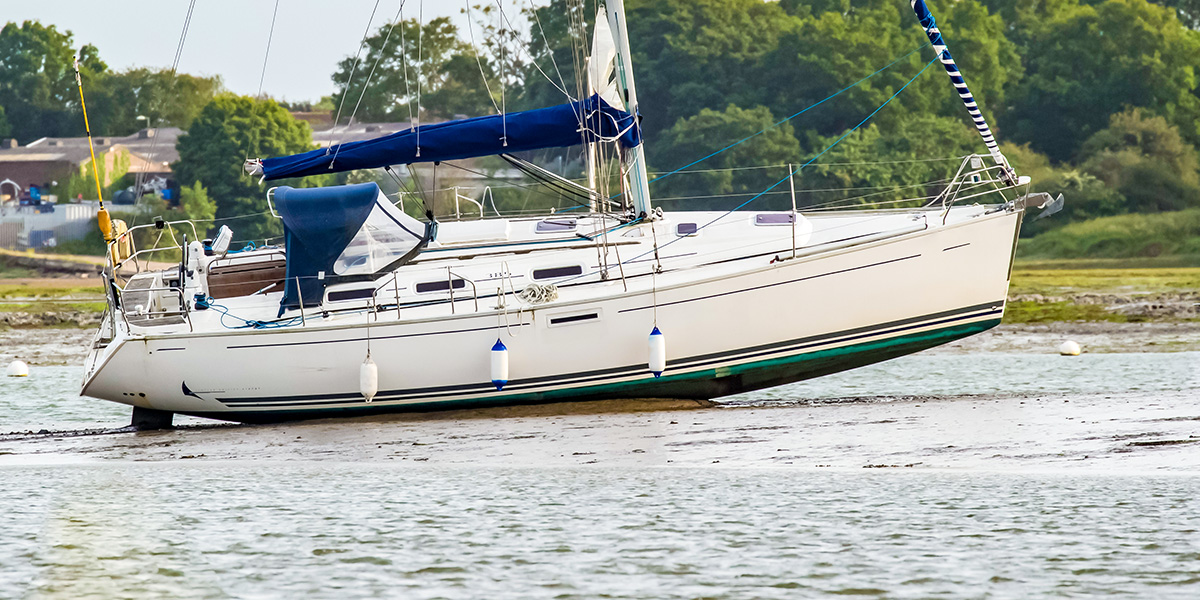
Running aground happens faster than you think. One minute we were riding high, lost in the excitement of our first real sailing adventure. Next, we all stumbled forward as the keel carved through the mud at the bottom of the Potomac River.
The halt was instant, shattering our illusions of an easy passage. Even the city seemed to hold its breath. The Washington, D.C., skyline watched, impassive, as we sat motionless in its still reflection.
The next 11 hours would be the longest of my life.
Is Running Aground Inevitable?
We’ve all heard the saying: There are two types of sailors, those who have run aground, and those who will run aground.
It is a calamity cocktail that every sailor must endure. If you are lucky, the tide will push you off. If you are unlucky like we were, nothing will go in your favor. Time will pass with a slowness that makes you question everything you think you know about seconds, minutes, and hours.
Virgin Sail
This trip was a trifecta of firsts. Our first boat. Our first journey. And our first time dropping her keel in the mud.
Having just wrapped up two years of extensive repairs, we were racing against the clock to move south. We’d carved out just a few precious days to leave our brand-new business behind in Asheville, North Carolina. We weren’t just ready, we were surfing on a wave of anticipation. Our excitement was in full bloom.
My father lived near our marina in Washington and had spent two years watching our enthusiasm ripen from the day we came into possession of the boat. At the last minute, he signed himself up for the adventure—insulin, high blood pressure, and all.
The Predawn
It was 5 a.m. My stepmother drove us to the boat before the first light. We had not a moment to lose if we were going to move the boat in what little time we had. We drove through the city in the soft blue light of dawn. Washington, D.C., painted herself in upside-down reflections across the still Potomac. Rowers soared through the river’s apparition leaving fractured images of bridges and monuments in their wake. The scene was too perfect for a postcard, too quiet for words. Slipping into that view was almost too good to be true.
My stepmother dropped us off. My husband, father, and I walked onto the dock and made our way to the boat. We stepped over the rails and started the engine.
“Like a damn sewing machine!” My father exclaimed when he heard the old diesel motor fire up. Of course, we had to use starter fluid to get the pistons firing. But such is the way of things with a busted old boat.
The engine chugged along, a lullaby of greased machinery spinning steadily. We untied the boat and pushed off the piling awkwardly with our battered boat hooks. I was buoyed by my father’s excitement. His health was in decline, and after his last boat sank to the bottom of the Potomac, we all assumed his days on the water were over.
We cleared the pilings around our slip and were off, riding high on the tide of adventure.
Running Aground Is an Abrupt Stop
About three minutes went by as we headed toward the main channel in the Potomac. Then, everything came to an abrupt halt.
“What happened?” I asked. “Did we hit something?”
My husband was at the wheel. He looked to the left and to the right. We all looked at each other.
“I think we ran aground,” he said.
In our excitement, we completely missed the first channel marker out of the marina.
The sun was climbing over the D.C. skyline, illuminating the city’s architecture, as well as our shameful dilemma. We were probably 100 feet from the marina’s transient dock.
“Quick, call Maria Claudia!” I said. My stepmother couldn’t be far. She dropped us off not even 15 minutes ago.
A few minutes later she walked down the dock in her pants suit and high heels.
Some cleats on the dock had lines all coiled up in nice little spirals. She grabbed one and tried to toss us a line. The scene was tragic and hilarious all at once. She couldn’t throw the line more than 10 feet. So instead, we tossed her a line from our boat. It landed on the dock. And there she was, dressed for success as she tried to pull us off the mud.
I didn’t know whether to laugh or cry.
Winter was approaching and the weather was cold. A brisk breeze bellowed over the water.
After my stepmother’s heartfelt efforts petered out, she gave up the struggle and tossed the line. But not before tying it around a cleat on the dock first—you know, just in case.
Domino Effect
At this early and underfunded stage of our sailing career, we did not have a dinghy. We didn’t even have a kayak. We sat on the boat 100 feet from the dock and briefly contemplated swimming to shore. But the air and the water were frigid. My father was undoubtedly not up for that kind of adventure.
I had purchased towing coverage a few days earlier, in case this very thing should befall us. I picked up my cellphone and dialed the number. They found me in the system, but they were not able to tow us at that location.
“What?”
I was dumbfounded. I still don’t understand it.
OK, time to call a tow company. A local water tow company answered and quoted us $2,500 for the tow. That, however, was just an estimate.
“It could be significantly more,” they told us.
That was not in our budget, especially not for a free boat.
Then we saw the harbor police zip by. They patrolled the area regularly. We hailed them on the radio. My father was getting cold and the boat was listing more severely with each passing minute. We were all leaning awkwardly inside the cabin.
The harbor police rolled around in a heavy-duty inflatable vessel. He could have easily pulled us off the mud, or even pushed us. But of course, that was out of his “jurisdiction.”
“I can get you, your husband, and your father safely to shore, but that is all I can do.”
He ferried us 100 feet to the dock. We all lined up and took a sad, long look at the boat. The mast was slowly angling itself toward the water. But enough of that; it was still early. There would be plenty of time to watch the boat make a pitiful show of herself as the water receded.
The Tide
We ran aground just after peak high tide. That is the worst time for running aground. The water was scheduled to fall—slowly revealing the underkept bottom of our boat—and not return to high tide for another 11 hours.
Our only chance of getting her off was to wait for the tide to rise back up—at about 5 p.m. that evening—and try to float off at peak high tide.
The View
Running aground is one thing in the middle of nowhere, where the depths are questionable and the charts unreliable. But we ran aground in the most conspicuous place imaginable: the middle of our nation’s capital. Regattas were scheduled to take place and the sailing club was ever-present. Even the passengers departing from Reagan National Airport could see our disposition at takeoff.
Our boat sat stubbornly in the mud right in front of the Washington Sailing Marina’s flamboyant restaurant. The restaurant is well-known for its fine dining paired with a postcard view of the water. On this day, we were the unexpected centerpiece. Our boat was in the middle of the view out of the restaurant’s picture window.
High Tide
Five o’clock rolled around in what would prove to be the longest day of our lives. My husband was drowning his sorrows at the bar. We listened with our heads low as everyone cracked jokes about the ‘poor idiot’ that ran their boat aground.
Finally, finally, our mast was fully upright and the hull hovered above the mud. She floated with the tide and we brought her back to the slip with our tails tucked between our legs. Losing a full day meant we didn’t have sufficient time to complete our intended journey.
Instead of pulling into a new marina, we were forced to sign another lease with the Washington Sailing Marina. They didn’t offer month-to-month slips, so we had to invest in a much longer commitment. We waited a year before we attempted the journey again.
Running aground was a sobering event.
Running Aground Lessons Learned
We didn’t learn how to sail by going to sailing school, getting certifications, or even chartering a boat. We simply hopped on board and barreled through each boating lesson one painful calamity at a time. This particular event consisted of an assortment of preventable mistakes. Thanks to us, you don’t have to make them. Consider the following:
- Pay attention to the channel markers and don’t deviate. That one is obvious. But channel markers just don’t carry the same weight until you have run aground.
- If you need to traverse questionably shallow water, do so before high tide, not right after. If your boat runs aground, high tide will be right around the corner so you can float right off. In some places, a king tide can factor into this scenario. I’ve heard of people running aground right after a peak king tide and having to wait weeks to get their boat floating again. A nightmarish scenario like this could require a floating crane to pull a boat off the shallows. Unless of course, there are none in your area.
- Ensure that the towing coverage you pay for covers the areas where you plan to do your boating. I don’t know what tier of Sea Tow insurance I purchased, but it didn’t cover the D.C. area at the time. TowBoatUS does service the DC area, and every area on the East Coast. We have used their service many times for a variety of colorful scenarios.
Humility Gained From Running Aground
Running aground is a terribly humbling experience. But humility is a skill that has to be woefully earned. Our pride was severed with our plans, but our inexperience started to ebb with each misadventure.
Eventually we stopped calling it bad luck and started calling it practice. This way of learning adds a little grit to the pot, and eventually a little grace (although I’m still on the waiting list for the latter.)
Olivia de Soria
You might also like


