Cruising the Grenadines Creates Lifetime Memories

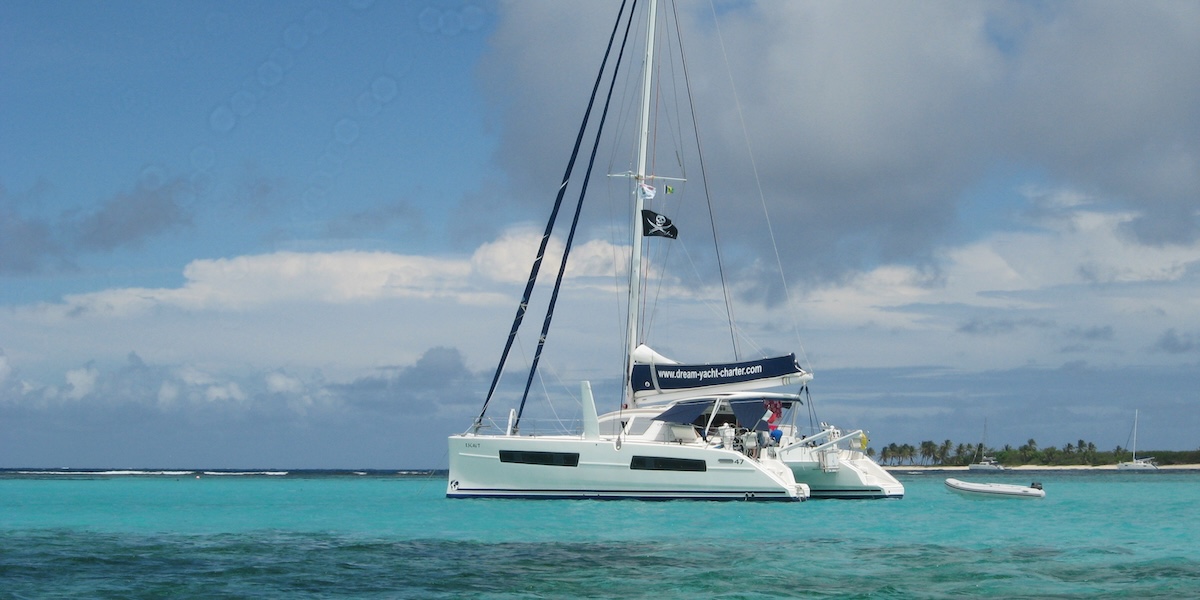

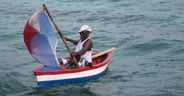
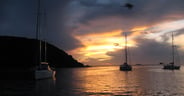
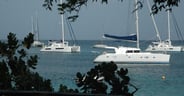
Running along the crescent of the Windward Isles in the Caribbean are the postcard-perfect Grenadines. These compact islands differ from one another like snowflakes. Sandwiched between St. Vincent in the north and Grenada to the south, these little gems can occupy sailors for months. Cruising the Grenadines is often remembered as a highlight of any visit to the area.
Years ago, St. Vincent was known as Hairoun, which means “home of the blessed,” and today it’s also a brand of a popular local beer. This main island and the smaller Grenadines have endured a tumultuous history. The region was alternately settled by Arawak Indians, Carib Indians, and a mixed bag of Europeans.
Colorful tales include stories of missionaries, wrecked slave ships, and rumors of cannibalism. Nothing, though, matches the islands’ stunning natural beauty.
Highlights of Cruising the Grenadines
St. Vincent and the Grenadines together form one country of more than 30 islands stretching 40 miles along the eastern Caribbean. Highlight islands include Bequia, Mustique, Union, and the Tobago Cays. But cruisers have access to dozens of one-boat anchorages where they can drop the hook and feel the trade winds on their skin in the shade of the cockpit.

Bequia
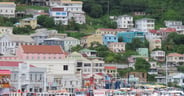
Bequia (pronounced Bek-way) is the largest and northern-most of the Grenadines after St. Vincent. It is home to possibly the friendliest people in all of the Caribbean. Admiralty Bay provides easy anchoring and moorings off the beach of Port Elizabeth. There, “boat boys” in small craft assist you with hooking up to a mooring, delivering ice, or hauling away trash. They are men and women who work for tips and will take good care of you if you take care of them.
The main town of Port Elizabeth is a wonderful place to provision, check out handmade souvenirs, or find a new book to read in the colorful bookshop. Walk the Belmont Walkway, a waterside path with dive shops, boutiques, bars, and restaurants such as Mac’s Pizza. You can also take the dinghy around the corner to Jack’s bar on the lovely Princess Margaret Beach.

If time permits, hire a taxi in town for a visit up the steep hills of the island. It’s a fun trip, but your reflexes will have you hitting your phantom brake pedal.

Mustique
Just 10 miles to the southeast is Mustique, a mostly-private island packed with vacation homes of the very rich and arguably famous. You are not allowed to anchor, so you must take one of the expensive moorings ($220 EC or $85 USD). You can’t visit much of the island, but the rebuilt Basils’ Bar on the bay is an entertaining visit. If you can, time your stop during the Mustique Blues Festival in January.

Tobago Cays
Another 21 miles south and on a perfect beam reach are the Tobago Cays. Tucked behind Horseshoe Reef, these four mostly uninhabited islets are where lasting memories are made while cruising the Grenadines.
They were designated a national marine park in 1998, so rangers collect a fee of $5 per person per day. Moorings cost about $20 USD. Thanks to the protective reef, this is a perfect spot for snorkeling and kitesurfing. The nearby sanctuary off Baradel Island is home to dozens of rays and turtles that are so accustomed to humans that they’ll swim right by.

The Tobago Cays are all about natural beauty, swimming, and relaxation. Visitors face few distractions other than boat boys selling T-shirts and a nighttime beach barbecue where you can tuck into conch salad and a grilled lobster at a picnic table under strings of lightbulbs. It’s bliss.
Union Island
On the horizon and just 3 miles south is the 900-foot Mt. Parnassus on Union Island. You can get there one of two ways. Either thread your way through the southern exit of the Cays or double back the way you came in from the west. From there, head down to the island’s main town of Clifton. It is a small but vibrant village that offers terrific bars, good provisioning, and some basic yacht necessities.

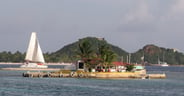
Make the short dinghy trip to Janti’s Happy Island in Clifton Harbor. It’s an islet made of thousands of conch shells. Janti, the enterprising local builder, added a generator and a blender and now it’s the best bar from which to watch the sunset. Beware the rum punch, though, because it indeed packs a punch.

If the weather is kicking up, Clifton is too much of an open roadstead, so sail around to the western side of Union to Chatham Bay. This large bay offers plenty of anchoring space and beach shacks advertising lobster dinners and “Figure Licking Good Food.” Take a hike in the hills above Chatham and enjoy fabulous views back to the Tobago Cays. If you’re lucky, you might encounter tortoises and tiny island deer.

Carriacou Island
Have you ever dreamed of spending time in a Robinson Crusoe–like paradise? Yes? Then catch a mooring at Sandy Island across from Carriacou Island on the way down to Grenada. This spit of sand is designated a park, so you can’t anchor, but you can spend a quiet night on your own islet where your footsteps may be the only ones in the sand.
Sailing Conditions and Logistics
Temperatures are fairly consistent year-round in the Windward Islands, around 80 to 85 degrees. The trade winds blow a refreshing breeze year-round. Hurricane season is June 1 to November 1, so storms are possible, but a direct strike here is less likely than farther north. Some insurance companies consider Grenada to be below the hurricane belt, and since it’s only a day’s sail south, many cruisers set a course there during the summer and fall.
The wind and water are bigger here. Typical conditions see the wind blow 20 to 30 knots and waves kick up to 4 to 6 feet. But that also means you’ll sail more and motor less. That’s good because fuel isn’t cheap in this part of the world.

Marinas are few in the Grenadines outside of the Blue Lagoon at the southern tip of St. Vincent and the Grenada Yacht Club in St. Georges in Grenada, so anchoring and moorings are standard. Cruisers will find a few moorings for a fee around Bequia, Mustique, and the Clifton side of Union Island. Not all moorings are fair game, however. Some are private and others are for commercial vessels only. Ask for permission before you pick one up or you may be told to leave. Even if it’s in the middle of the night.

Sailing south from St. Lucia, you’ll technically enter the country in St. Vincent and although this is a fun island with great diversions like historic Fort Charlotte above Kingstown and a wonderful botanical garden, it’s not the easiest place to check in. For that, you may give this island a miss and head straight to Port Elizabeth on Bequia. You can walk to the port and customs office from the dinghy dock and officialdom is much smaller and friendlier here. If you have guests flying in to meet you, they can land on St. Vincent and take a quick ferry down to Port Elizabeth to meet you.
Provisioning While Cruising the Grenadines
Provisioning is easy, especially on Bequia and Union. Check out Doris Fresh Food in Port Elizabeth and Captain Gourmet in Clifton. Local produce is unusual and fun. Try the sugar-apples, durian, callaloo, and soursop. The latter is excellent, but good luck separating it from its seeds.

Local currency is the Eastern Caribbean dollar (EC), which converts to about 40 cents in U.S. dollars. Most establishments accept U.S. dollars, and cash is necessary at the small market stalls.
Sunscreen and shade are key in this part of the world, which is just 12 to 13 degrees north of the equator. Bring adequate skin protection or plan to sizzle.
Take Your Time Cruising the Grenadines
Long-range trawlers and superyachts do make it to the Grenadines, but mostly it’s a sea of cruising sailboats of all shapes, sizes, and ages. Cruisers can spend two days or two months here. Regardless of how long people stay, many of them remember these anchorages for the rest of their lives. So don’t rush when cruising the Grenadines.
Zuzana Prochazka
You might also like


