4 Terrific Trolling Motors for Bass Boats



Buying gifts for a serious bass angler can be incredibly challenging for loved ones less invested in the activity. The gear they want isn’t novelty, but rather equipment that directly affects how they fish. And let’s call it how it is: this stuff is especially technical. However, few upgrades transform an angler’s experience more than new trolling motors for bass boats.
These motors have evolved into precision control systems that shape everything from boat positioning to sonar performance. Give your angler the right one, and you’re giving more more than just a gift. You’re giving them new possibilities on the water.
So for the non-fishing loved ones who want to make a splash this holiday season, we’ve highlighted four elite trolling motors for bass boats. Quiet, powerful, tech-forward, and finely tuned, these are the gold standard for anglers who take their boat control as seriously as their casting.
Before we dive into what makes each motor unique, it’s worth stepping back to consider the fundamentals. The technology inside today’s trolling motors is far more advanced, and far more important, than many anglers realize.
The Fundamentals of Trolling Motors for Bass Boats
Seasoned boaters know that thrust alone doesn’t tell the whole story. A trolling motor’s real performance comes from the relationship between its power curve, steering system, acoustic signature, and how efficiently it turns battery voltage into usable torque.
Brushless Power and Torque Density
Five years ago, brushless motors felt like a novelty. Today they’re the standard for top-tier trolling motors for bass boats, and for good reason. Brushless motors produce higher torque at lower RPMs, meaning they can push bigger bass boats—especially 20- to 21-foot hulls—without spiking battery demand. They also create a smoother, more controllable thrust curve, which allows the operator to make better micro-adjustments in wind and current, and around structure.
Brushless systems also run cooler and have fewer wear points. Anglers fishing eight-hour tournament days with sustained Spot-Lock usage will appreciate the lower heat load and reduced friction. It means more consistent performance as the day goes on.
Steering Architecture: Cable vs. Electric
Cable steering remains the gold standard for many anglers because it provides instantaneous response and intuitive feedback. You feel resistance, torque, and directional force through your foot. Electric steering, however, allows for smoother long sweeps, integrated GPS control, and remote steering from anywhere in the boat.
The best motors bridge the gap between these two systems. Some replicate cable feel digitally; some blend cable and servo systems. The question isn’t which is better, but which aligns with how the angler fishes.
GPS Anchoring and Hold Stability in Trolling Motors for Bass Boats
Spot-Lock, Anchor Mode, and Pinpoint aren’t marketing terms. They are real, advanced control algorithms. These systems rely on a mix of GPS, digital compasses, and internal gyros to maintain position. The difference between a good system and a great one is how quickly it reacts to drift.
Experienced anglers know that hold stability is everything on small targets: brush piles, rock spines, channel edges. When a motor can hold a boat within a 2- to 3-foot radius in quartering wind, it changes what’s possible in modern bass fishing.
Sonar and Network Integration in Trolling Motors for Bass Boats
Every major sonar brand now syncs with its companion trolling motor to achieve precision. When a trolling motor communicates directly with a boat’s mapping, transducer, or forward-facing sonar, the boat tracks contour lines, navigates to waypoints, and holds over structure with unmatched accuracy.
The trolling motor becomes an extension of the sonar, not a separate tool.
Minn Kota Ultrex QUEST

Price: $3,899.99-$4,099.99
The Ultrex has been a dominant force in the bass-boat world for years, and the QUEST brushless platform pushes it into a new tier. What separates the Ultrex from other motors, though, is its steering system. The cable feel is authentic, immediate, and unmistakable. You know exactly where the motor is pointed because your foot is physically connected to the steering mechanism. That mechanical certainty appeals to anglers who fish in tight, structure-heavy water where split-second adjustments matter.
The brushless QUEST motor produces more torque at lower RPMs. That reduces noise while delivering strong thrust even under heavy load (e.g., when pushing a 21-foot fiberglass hull into a crosswind). Spot-Lock on the QUEST is tighter than previous generations, due in part to improved sensors and better position-holding algorithms. The motor also pairs seamlessly with Humminbird MEGA Down Imaging and MEGA 360. That means structure, waypoint navigation, and boat positioning all operate inside the same ecosystem.
Ultimately, the Ultrex QUEST’s greatest strength is its feel. It behaves like a classic cable motor but with the efficiency, precision, and integration of a modern brushless system. For many anglers, this is the benchmark.
Lowrance Ghost X

Price $3,149.99-$4,369
The Ghost is the quietest trolling motor many seasoned boaters have ever run. It is so quiet that the hull often makes more noise than the motor itself. That silence is a result of Lowrance’s brushless architecture, which is engineered not just for efficiency, but for minimal acoustic disturbance. On clear-water lakes, where wary bass hear everything, that matters.
Steering on the Ghost is ultra-smooth. Even though it’s not a cable-steer motor, its electric response is immediate and precise, with no lag or overshoot. The pedal feel is fully adjustable, letting anglers tune its resistance until it matches their preference.
Anchor Mode (Lowrance’s version of Spot-Lock) is one of the most stable systems on the market. Because the Ghost integrates directly with Lowrance HDS, HDS Pro, Elite FS, and ActiveTarget, the boat’s navigation and sonar systems talk to the motor constantly. The result is smoother transitions, precise waypoint-to-boat alignment, and excellent hold around forward-facing sonar targets.
Battery consumption is another winning trait. Ghost users regularly report noticeably longer run times, especially in rough water or when using Spot-Lock for long periods. For tournament anglers, that efficiency translates to confidence late in the day.
Garmin Force Pro

Price: $3,799.99-$3,899.99
Garmin entered the trolling motor game late, but its Force motor quickly established itself as one of the strongest, fastest, and most efficient trolling motors for bass boats. What grabs most anglers is its raw power. Force generates exceptional thrust, even at 24 volts, and jumps to another level entirely at 36. This makes it a favorite among anglers who fish in high winds and on big reservoirs or expansive flats.
The wireless foot pedal is surprisingly natural. Garmin engineered it to replicate cable-steer behavior, with instant directional response and a firm mechanical feel (even though it’s digital). For anglers switching from cable steer, Force arguably softens the learning curve better than any other electric-steer motor.
Garmin’s integration is, unsurprisingly, best in class. When paired with Echomap or GPSMAP units—and especially Livescope—the motor becomes a precision navigational tool. The boat can follow contour lines, hold angles during forward-facing sonar scanning, or navigate automatically to a waypoint with high accuracy.
Durability is often overlooked, but Force’s composite shaft and sealed internals make it extremely tough. Many big-water anglers choose it simply because it’s one of the few motors that can muscle through chop while holding a mark.
MotorGuide Tour Pro

Price: $1,344.99-$1,617.99
The Tour Pro is the last truly hybrid trolling motor: mechanical cable steer combined with digital GPS anchoring. The pedal is crisp, responsive, and instantaneous. The angler receives physical feedback no electric-driven pedal can fully replicate.
MotorGuide’s Pinpoint GPS anchor is excellent. It uses a combination of GPS and a high-precision digital compass to hold a boat steady with minimal correction. The Tour Pro’s anchor movements are subtle and efficient, making it ideal for anglers fishing isolated cover where large steering swings can spook fish.
The Tour Pro is also rugged. The metal brackets, stainless hardware, and reinforced shaft are built for shallow-water abuse: shell bars, rock banks, cypress knees, you name it. It’s a motor built for aggressive inshore maneuvering or beating through grass and hydrilla.
While it doesn’t have the same level of sonar integration as the Ghost or Force, its performance in tight quarters remains as good as any. Many shallow-water anglers choose it simply because it reacts instantly when they need it most.
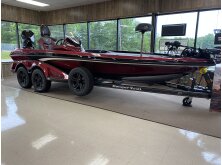
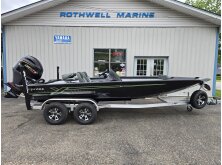
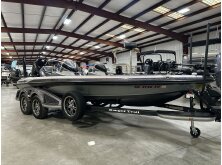
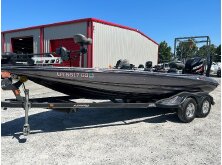
Bass Boats For Sale

 David Schlake
You might also like


