What to Look for in Wetsuits for Watersports

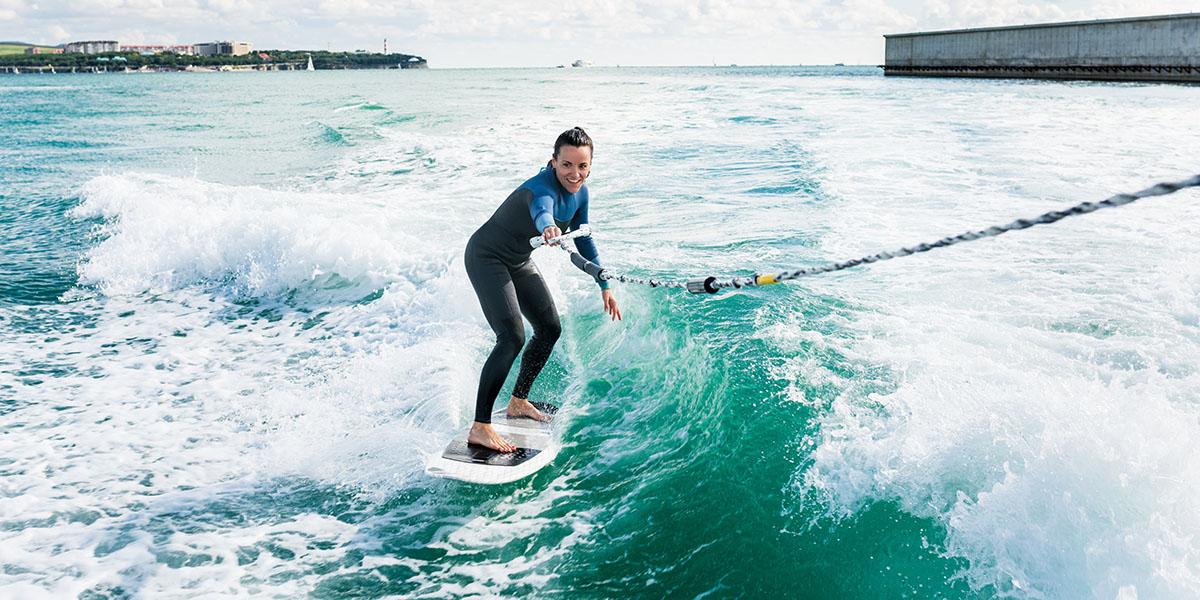
One of the smartest ways to maximize your investment in tow sports equipment is to add a wetsuit to your gear. Wetsuits for watersports extend your season and let you enjoy your favorite activities—waterskiing, wakeboarding, wakesurfing, barefooting—at both the start and end of the season. It also opens the door to riding on cooler mornings, late afternoons, or those unexpectedly cool summer days.
Types of Wetsuits for Watersports
Ask yourself an important question when choosing wetsuits for watersports. Which exact type and thickness best serve your needs? Any wetsuit will help keep you warm, but wetsuits come in a variety of styles and thicknesses. So choose the one that fits your needs by asking the right questions.
Wetsuits are made of neoprene rubber and are designed to provide warmth while allowing the wearer to move freely. They also provide protection from falls on the water. Neoprene has been used for dive wetsuits since the early 1950s. Those wetsuits were built for warmth.
It wasn’t until the late 1960s that manufacturers started designing wetsuits specifically for waterskiers. Unlike dive suits, waterskiing wetsuits were designed to offer more flexibility and to give skiers the mobility they needed.
Wearing a wetsuit will keep you warmer on the water. But there’s a trade-off: neoprene restricts movement to some small degree. So the real question becomes this: What’s the perfect balance between warmth and mobility for your sport, the water temperatures, and the weather conditions you ride in?
Styles of Wetsuits for Watersports
Wetsuits for watersports come in different cuts. Let’s look at several of the most common.
Full Wetsuit
This wetsuit features a long leg cut. Neoprene covers the legs to the ankles. Full wetsuits are available in different arm lengths:
- Long sleeves: Neoprene covers the arms down to the wrists.
- Short sleeves: Neoprene covers the arms just above the elbow.
- Sleeveless: Shoulders and arms are fully exposed for maximum mobility.
Shorty Wetsuit
This style features neoprene coverage to just above the knees. Like the full wetsuit, shorty wetsuits come in long sleeve (to the wrist), short sleeve (just above the elbow), and sleeveless (maximum shoulder and arm mobility).

Pullover Neoprene Shirt-Style
This style covers the upper body like a shirt and warms the chest, back, and shoulders. It’s available in both short-sleeve and long-sleeve versions and comes in a zipper or pullover style.
Neoprene Shorts
Some wetsuit companies also make neoprene shorts in a variety of sizes. These shorts can be worn with or without a neoprene shirt or pullover to provide customized warmth and protection.
Barefoot Wetsuit
In the 1950s—the early years of barefoot waterskiing—the only protection a footer had was a pair of Jantzen swim trunks. Fortunately, wetsuits for watersports are designed today specifically for people who ski without skis. These are typically thicker—usually 3 mm—and feature added padding in key areas like the seat, chest, and back. This extra protection helps with deepwater starts, tricks such as tumble turns, and absorbing the impact of falls. Barefoot wetsuits come in short-sleeved and sleeveless styles.
How to Choose the Right Wetsuit for Watersports
Today, watersports enthusiasts can choose from a wide variety of options to help them stay warm on cooler days. To choose the right wetsuit, know how cold the water usually is and how much flexibility you want. Flexibility becomes especially important when you’re performing rotational tricks or flips on a wakeboard, kneeboard, wakeskate, or trick ski.
When it comes to staying warm on the water, the most important part of your body to consider is your torso. A full or shorty wetsuit will take care of that.
Knowing that much, consider the following:
- How much of your legs and arms do you want covered?
- What thickness of neoprene do you want?
More neoprene coverage and added thickness will provide more warmth, but the tradeoff is reduced movement and maneuverability. To answer the questions above, consider the temperature of the water and air where you ski or board, how well you tolerate cooler temperatures, how long you spend in the water, your tow sport, and the tricks you’re working on.
Next, think about your arms and legs. This is where you can tailor your wetsuit choice to your specific needs. It’s all about finding the balance between the water and air temperature and the level of flexibility your sport requires. Half sleeves provide more flexibility than long sleeves, while sleeveless suits offer the most freedom of movement.
Wetsuits for watersports range in thickness from 1.5 mm to 4 mm or even 5 mm. Some suits are designed with a thicker body (say, 3 mm) and thinner arms (2 mm) to keep the torso warm and offer more arm flexibility. In conditions that aren’t too cold, most watersports enthusiasts opt for the 2 to 3 mm range to balance warmth with maneuverability.
Style and Size Are Personal
Choose the style and size of a wetsuit that fits your body best. Manufacturers make wetsuits for watersports with men’s and women’s cuts in a variety of sizes and wetsuits for teens and youth.
Use the manufacturer’s size chart to choose the right size. The wetsuit should feel tight—even a bit restrictive—when you try it on. Neoprene relaxes with use. If it’s easy to put a new wetsuit on, it’s probably too big. A snug fit minimizes water entry.
As you wear the wetsuit, it will stretch and conform to your body. For this reason, it’s best not to let anyone else use your personal wetsuit. Someone else might stretch it. Then it might not fit you like the proverbial glove anymore.
Conclusions
When it comes to choosing a wetsuit, it’s about what works best for you. The warmer you stay, the more you will enjoy your favorite watersports. You might even consider having two wetsuits for watersports. One style for cool summer mornings and one with more neoprene coverage for early spring and fall use. You can even wear a surfer’s rash guard to add warmth to your wetsuit. A rash guard adds warmth without affecting flexibility.
Let your wetsuit work for you and extend your season and give you more time to ski or ride behind your boat, even when the water and air are cooler. Once you figure out which style is best, you have an even more difficult decision. What color makes a fashion statement and makes you look your best on the water?
Zenon Bilas
You might also like


