Are You Ready for Digital Switching on Your Boat?

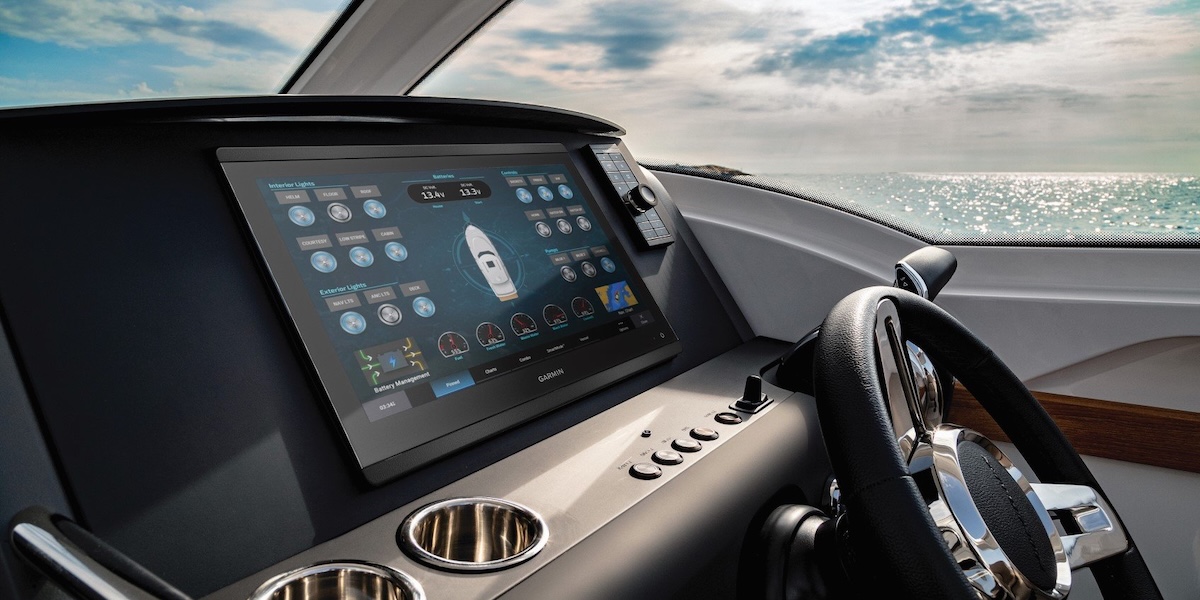
If you’ve been paying attention to the recreational boating world in recent years, you likely have heard about digital switching. It is making significant waves as boatbuilders such as Hinckley Yachts, Scout Boats, Sea Ray, Boston Whaler, Sportsman Boats, Jeanneau, and Beneteau integrate it into their new models. In addition to many others.
So what exactly is digital switching? And why is it such a big deal?
A Digital Switching Overview
Digital switching replaces the traditional mechanical toggle switches and circuit breakers that longtime boaters are familiar with. Instead of relying on bulky breaker panels and individual switches, digital switching uses a central control unit and networked digital power modules. These let users manage a wide range of onboard electrical functions—bilge pumps, air-conditioning, lighting, and lots more—through a streamlined, touchscreen interface.
This technology emerged in the automotive and commercial transportation sectors late last century. The marine industry began adapting it in the early 2000s, primarily for high-end custom yachts. At the time, these systems were expensive and required professional installation and programming, which prevented widespread adoption.
The big leap forward arrived when manufacturers such as Raymarine, Garmin, and Simrad began integrating digital switching into their multifunction displays (MFDs). This allowed boaters to control onboard systems directly from the same device they used for navigation, sonar, and engine data. The result? A more streamlined and intuitive experience.

Over time, components became more efficient and more affordable. Brands such as CZone and Maretron began to offer modular systems for smaller and midsize boats. That allowed production boatbuilders to incorporate digital switching at scale.
Advantages of Digital Switching
Simplifying and modernizing onboard electrical management has multiple advantages:
- Reduces wiring complexity and weight
- Allows real-time monitoring of electrical health
- Enables control from multiple locations and devices
- Supports programmable presets and automations
- Enhances onboard safety with proactive alerts
- Creates a cleaner, more modern helm
- Reduces stress by simplifying routine operations
Would you like to turn off every system with just one tap as you leave your boat? Program a “shut down” scenario. What if you want to dim the lights and lower the volume on the stereo for the evening? A “night mode” preset will do that instantly.
And if you’re returning to the boat after an evening ashore, you won’t need to fumble around in the dark for switches. Simply program an “arrival” scenario. It can turn on the lights, the air conditioning, and anything else you might need ahead of time.
How? Look no further than your smartphone or tablet.
Recent Technological Advances
Indeed, recent technological advances allow users to check and manage onboard systems from an app. Even if they’re away from the boat. Tech-savvy boat owners are already used to this kind of control in their homes and vehicles. Now, their boats can be just as “smart.”
What’s more, today’s systems are increasingly plug-and-play with NMEA 2000 networks. Many allow boat owners to set custom modes or automate functions without a dealer’s help.

Some digital switching systems also offer downloadable updates and diagnostics that boat owners can perform themselves. That means basic fault codes, power monitoring, and system status can be accessed by the owner without needing a technician (depending on the manufacturer).
Other advancements include improved touchscreen interfaces, user-friendly controls, and increasing interoperability between different manufacturers’ systems and devices. With every step forward, digital switching moves even farther into the mainstream.
What’s Next for Digital Switching?
If you’re interested in digital switching, keep three considerations in mind.
1. Cost Implications
Compare the potential investment required for purchasing a new boat already equipped with digital switching with that of retrofitting an older boat.
2. Learning Curve
Consider what it will take to familiarize yourself with the new technology and become proficient at using it. Do you have a knack for this sort of thing? Or will you need support, and if so, who will you use as a resource?
3. Contingency Plans
What will you do if you experience system failure? Some boatbuilders have redundant mechanical systems on board, just in case. So do your homework, ask questions, and make sure you understand what options are available to you in the unlikely event you have an issue.
Digital switching simplifies complex onboard systems, offers intuitive control and opens the door to smart automation. It’s a perfect example of how marine technology is reshaping the boating experience. And it truly is a game-changer, whether you’re buying a new boat or upgrading your current one.
Heather Steinberger