A Coast Guard Boarding Team May Board Your Boat. Are You—and It—Ready?

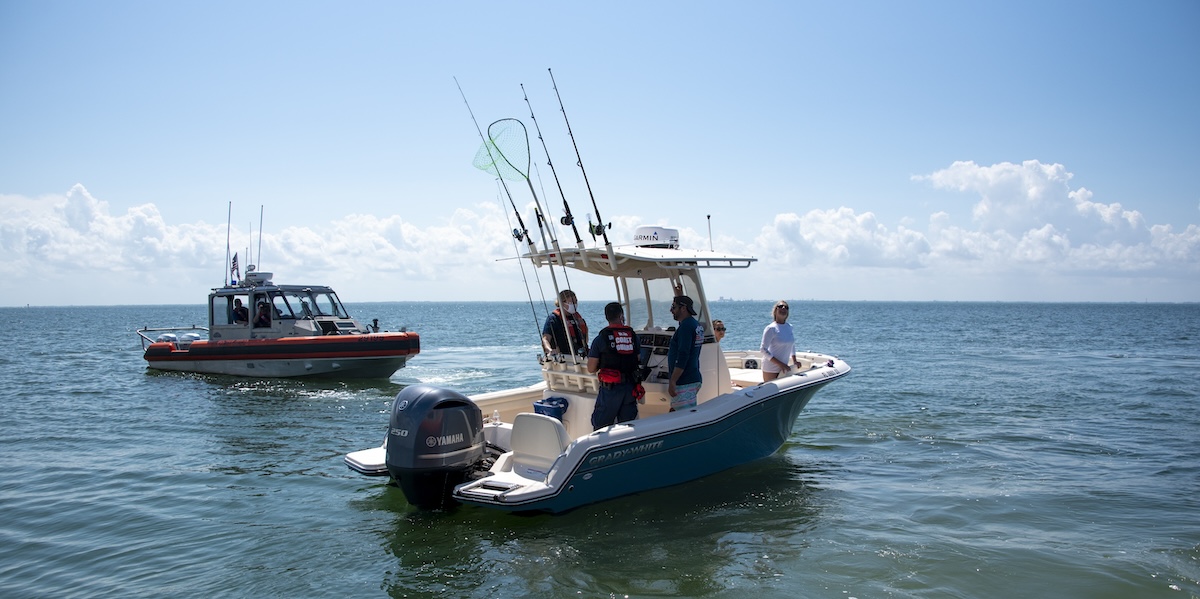
You don’t need to fear the U.S. Coast Guard. Remember that. Some boat operators may feel self-induced guilt when the red-, white-, and blue-clad Coasties appear and a Coast Guard boarding team joins them. But they shouldn’t. They aren’t necessarily being “busted” for anything.
Anyone operating a boat in ports or waters near international borders will probably endure a Coast Guard boarding at some point. As one of the five branches of the U.S. military—it joins the Air Force, Army, Marine Corps, and Navy—the Coast Guard is under the Department of Homeland Security and its purpose is to enforce laws and regulations.

Don’t Expect 4th Amendment Protection
Take note: You give up many of your Fourth Amendment rights at the docks when you start your boat in American seas. The Coast Guard does not need probably cause to board your boat. It is a rule that dates back to the late 1700s and the Revolutionary War. Any expectation of privacy on a boat in American waters is significantly reduced compared to on land.
When the Coast Guard pulls up to a boat, often it’s just to say, “Hey, we are just checking to see how you are doing today.” The Coast Guard crews are not out making boater’s lives miserable. They are out there to ensure safety and prevent accidents.
However, you can make a friendly Coast Guard stop confrontational by making their job difficult. If you throw a fit when a Coast Guard boarding team wants to board your boat, the stop may last longer and they may become suspicious.
Firearm on Board? Let Them Know Right Away
If you have a firearm or other weapons on board, let the Coast Guard boarding team know before they board. Firearms are allowed on recreational boats in most cases, but they must be stored safely and comply with state and federal laws. If the firearm is properly secured and you have the necessary permits, you likely won’t face any issues.
However, if the firearm is not stored correctly or if you are in a restricted area, you could face legal consequences. Those can include fines or confiscation of the weapon.
After they conduct a satisfactory initial safety sweep and make sure your registration and identification check out, they may look for drugs. If that happens, they will thoroughly search compartments and closets.
Life Jackets, Registration Must be Present
Heed basic regulations and you will likely prevent a citation. The Coast Guard boarding team will ensure that all children younger than age 13 are wearing life jackets and that there is a flotation device for each person on board. Make sure you have a noisemaker and a throw-ring with a line within easy reach.

The Coast Guard encourages everyone to wear a life jacket because already having one on when you go into the water is going to increase your chances of survival. Not only does a life jacket help you float, but it gives rescuers more to search for. They are essentially looking for a basketball-size object—your head—in the water. Today’s life jackets are more comfortable than old-style life jackets, as well as colorful.
A boat registration and a fire extinguisher are federal requirements, but too many boaters forget to have them aboard. Again, the Coast Guard’s main duties are certifying that boats are secure from foreign threats, checking for environmental compliance, and, most importantly, ensuring the boat and passengers are safe.
Question and Answer
The Coast Guard is composed of highly professional men and women who will provide answers to your questions. They do their best to be friendly and helpful. Still, maybe don’t look over their shoulders as they conduct their inspection.
It’s likely that one Coastie will stay with you and explain the inspection process or discuss relevant boating questions. If you are courteous, the Coast Guard boarding team will respond with the same demeanor.
Final Report and Departure
Once the inspection is complete, the Coast Guard will issue a Report of Boarding Form CG-4100. It is a two-page document stating the findings of a Coast Guard boarding, including vessel information, owner/operator details, location, and any violations or unsafe conditions observed.
It consists of a white original and a yellow copy. The captain gets the yellow copy. Keep it handy. Show it to Coast Guard officers if you are boarded again soon after the initial boarding. The boarding information is retained for three years and might be referred to if you get boarded again. Some “warnings” the Coast Guard issues can be considered for one year for civil penalty purposes.
A Coast Guard boarding team is nothing to fear as a boat owner. Make sure your boat is in order, all regulations are being observed, and necessary equipment is aboard. Most of all, be courteous and helpful. Their goal is safety, not citations.
Doug Thompson
You might also like


