Here Is Why We Keep Returning to the Intracoastal Waterway

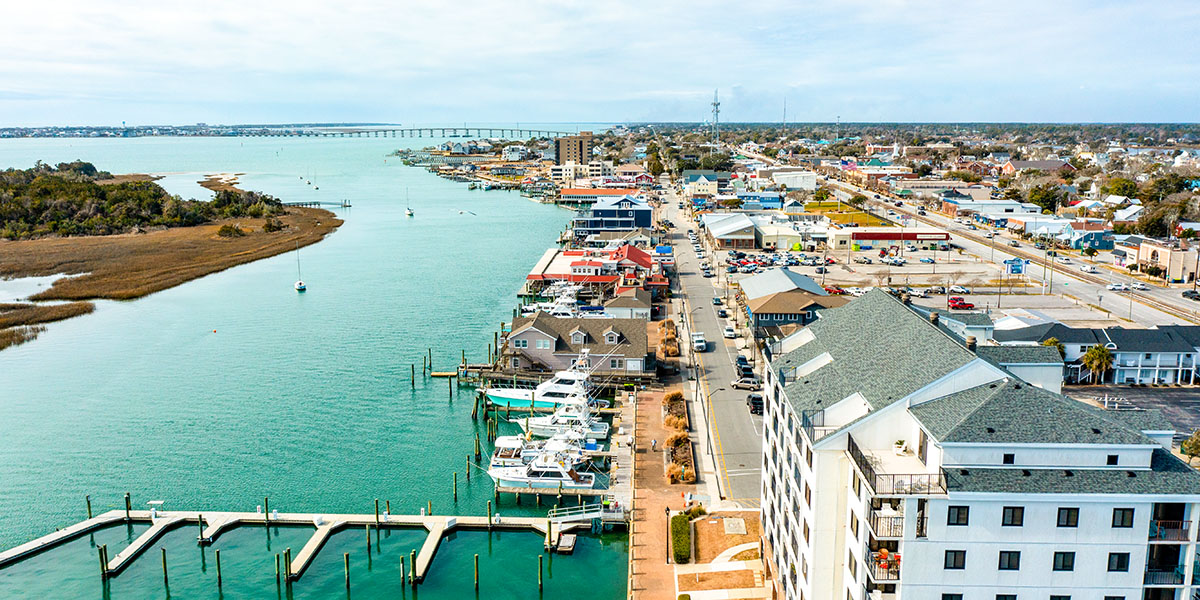
I spent my first few boating years trying to run away from the Intracoastal Waterway (ICW). My husband and I were trying to catch the ultimate view: that delicious blue water lapping against white sandy beaches as far as the eye can see. In our haste to get to the other side, we were forded at every turn. And for every additional week or month we had to spend waiting for a part or a repair, the ICW started snatching little spoonfuls of our hearts.
When we finally made it to that clear blue Caribbean water, we breathed a proud sigh of relief. And immediately started planning our way back to the ICW. Unbeknownst to us, the inland waters of the Intracoastal Waterway had carved a permanent little burrow in our wandering hearts.
Perfect Moments Hidden in Plain Sight
We woke at dawn to a gentle rocking. The local shrimp boats made a small wake through our anchorage. Their outriggers broke the surface of glassy water, trawling for crustaceans. Dolphins followed in their wake, weaving through the current and waves, the morning sun reflecting off their smooth bodies. An ebbing tide exposed villages of oysters and sea snails. This was the view we woke up to on so many mornings spent anchored off the Intracoastal Waterway in North Carolina.
With a slow and steady unveiling of the morning, I would sit back and let the scene fill me up. To many, it may seem less than postcard perfect, but I can’t imagine a better way to wake up.
The water isn’t clear, the beaches aren’t white, and the seashells aren’t intact. But all the imperfections glide harmoniously with the energy of a thriving waterway. Barges come and go, alligators swim lazily by, and waterfowl line the muddy banks on tall skinny legs. Fishing boats are everywhere, a testament to the thriving ecosystem that lives beneath the surface. The water is like a conveyor belt carrying boats along a historical route past quiet towns and untamed wildlife. It offers a backdoor view of the American Coast.
Small Boating Communities
One of my favorite byproducts of sailing is meeting other sailors. Grit and courage and reckless disregard perpetually follow in their wake. Each story shared is just as interesting as the individual telling it. We find plenty of this, with some to spare, in the little sailing community of Oriental, North Carolina. This sleepy little town is riddled with seasoned, salty seamen. Sailors and motorboaters come and go, leaving their stories and experiences behind to paint the town.

Oriental’s coffee shop, The Bean, sits across from the town dock. Locals and transients mingle together to enjoy an open view of the harbor. Shrimping boats in multitude park their massive weight alongside sailboats and powerboats. The rusty metal hulls of the shrimp boats add an authentic flavor, as well as an unmistakable smell. You either love it or you hate it.
The locals are enmeshed in the transient sailing community. Everyone is attuned to the rhythm of the water, the tides, the wind, and the wind-blown tides. This is one of many small boating towns that thrive with the ICW. They function symbiotically with the commercial and recreational fisherman, as well as the transient boaters.
Of course, not all towns along the ICW are like this. If you have a guide with you, such as one from Waterway Guide Media, such towns will be easy to find.
A Backdoor Entrance to American Towns
The Intracoastal Waterway offers a unique perspective on coastal American towns. Rather than arriving by car—driving through suburban cross sections and homogenous-looking corporate shopping centers—you arrive through a kind of back door. Imagine entering a historic church through an underground basement tunnel. Your view of the interior will hit you a little differently than if you walked straight through the front door.
Every time we arrive at a little town on the ICW, we read the guidebooks to find a suitable anchorage or transient dock. Upon arriving, we set anchor, lower the dingy, and make our way to a dinghy dock. From there, we walk into town and let the area wash over us. Each town has a different energy, and each one leaves a different impression on us—an authentic local, raw, unfettered mark.
History Along the Intracoastal Waterway
Every town we visit is swathed in its own unique history. Encountering each place from the water adds to the historical significance of every story. I mean, this was traditionally how the town was likely accessed. In the south, everything is more mysterious under elegant curtains of gently swaying Spanish moss.
In Beaufort, North Carolina, my husband and I walked along the cobblestone sidewalks that meander slowly back to the water. We passed an old cast-iron fence beside a modest cemetery. There was something so inviting about this seemingly insignificant swath of land. We walked inside as dusk began to fall. Known as the Old Burying Grounds, the cemetery was established in the 1500s. Some of the headstones were so worn they looked like nothing more than large rocks. It was positively spooky, and irresistibly mysterious.
As we explored the grounds, a historic significance began to reveal itself. Revolutionary War soldiers lay beneath the grass. Some of the unmarked graves belonged to people who perished during the Indian Wars with the Coree and Neusiok Native American tribes. The history here ran deep and far, in a timid square of land quietly resting beneath the Spanish moss.
As we traveled through Georgia’s endless winding maze of waterways, we anchored outside Fort Frederica. It was the perfect place to stretch our legs and rest our eyes on astounding views. The history was dark, the shadows of the slave trade and human suffering inescapable. And yet, this same history is such an important thing to learn and visit. I appreciated this firsthand opportunity to teach my children about the uncomfortable aspects of our country’s past.

As we traveled slowly through the Deep South, we read books, visited libraries, and had honest discussions about the history behind each place.
The View Along the Intracoastal Waterway
Speaking of Georgia, most boaters like to cut outside into the ocean here to avoid the endless winding switchbacks of the ICW. Narrow canals snake back and forth for days and days. All the while, you must plan for a wicked 10-foot tidal range. The Intracoastal Waterway in Georgia lacks proper funding. In the absence of regular dredging, you can expect to run aground if you deviate off course for even a moment at the wrong spot. And in some cases, you can run aground right in the middle of the channel. Welcome to the ICW in Georgia.
And yet…
The view. There is nothing like it. At the outset, I wrote about running full speed for the white sandy beaches of the Caribbean. But looking back, the golden isles of Georgia’s swamps and grasslands were just as beautiful, if not more. It epitomizes what I love about the ICW. The view is hushed and sometimes goes unnoticed. The sun does this thing to the grass; it turns golden and almost seems to light up from beneath. The waterbirds own the landscape. They stand still as marble statues along the edges of the sage grass, tense and ready to pounce.
Time doesn’t follow the same rules here. In places like this, seconds go the long way around the clock.
Ease of Use
When we were new boaters, the Intracoastal Waterway offered us a safe and somewhat predictable place to hone our technical boating skills. Sailing in the ocean is pretty straightforward, but waiting for bridge openings, learning the tides, docking your boat, anchoring your boat, and navigating complicated waterways and inlets are all valuable skills that we acquired on the ICW.
Although at times a bit complex, the inland waterways are protected and predictable. They are a perfect teaching ground for new boaters. Many iconic boating destinations require a mad dash to catch the view. On the ICW the pace is a little slower. If you sit back, relax, and observe, the view will come to you.
Olivia de Soria
You might also like


