How to Beach Your Boat: A Beginner’s Guide to Beaching Up

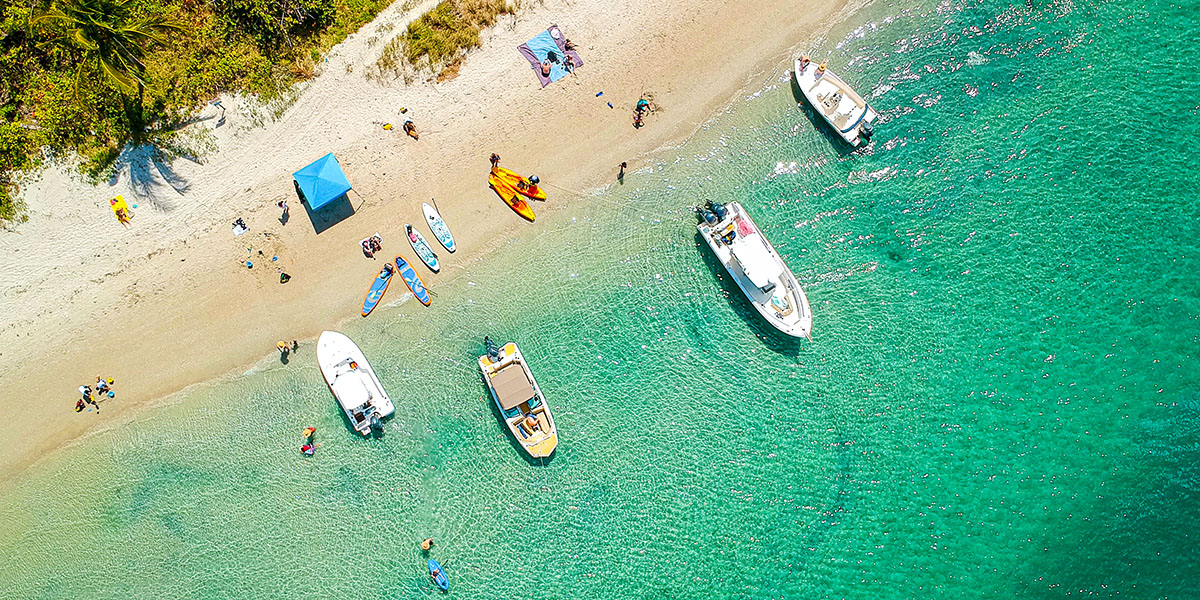
Have you ever heard a boater say they are meeting friends at the sandbar on a summer afternoon? Or that they’re heading for a favorite shoreline spot that doesn’t have a ramp, day dock, or marina nearby? They are talking about beaching up, and it’s exactly what it sounds like. You just have to know how to beach your boat.
To beach up, you literally bring your boat onto the beach so you and your guests can jump off and splash ashore. There, everyone can spend a few carefree hours swimming, sunbathing, picnicking, and playing in the sand. The best part? Beaching up gives you access to some picture-perfect spots that can’t be reached by car.
It might sound straightforward, but beaching up isn’t quite as simple as parking a car. And it’s not quite like participating in a raft-up either. To avoid unpleasant surprises such as getting stuck or damaging your boat, learn and remember a few keys about how to beach your boat.
Make Sure Your Boat Is Beach-Friendly
Many types of boats can handle gently coming ashore on a sandbar or a beach. Pontoon boats, deck boats, flats boats, and skiffs are all great choices due to their aluminum tubes or their flat hulls and shallow drafts.
Jet boats are well-suited for beaching since they rely on a jet drive rather than a traditional propeller. That reduces the risk of damage. Bowriders and center consoles can work well, but you have to consider the hull design and the propulsion system.

Unsure? Take a Closer Look at Your Hull
For safe beaching, check two things: your boat’s draft and its hull shape. Ideally, your boat should have a shallow draft of 12 to 18 inches. Deeper drafts can still work in the right conditions and with an experienced skipper, but shallower is better.
The boat also should have a flat-bottomed hull or a moderate-V design. Boats with deep-V hull are prone to grounding, listing, or even tipping. (And don’t even think about beaching a sailboat with a fixed keel.)
Also, keep in mind that lighter, smaller boats are easier to reposition if needed. If you have a larger, heavier cruiser with a deep-V hull, your best option for how to beach your boat is actually to anchor offshore and take your dinghy ashore. Or kayaks or standup paddleboards, if you are so equipped.
Don’t Forget the Propulsion Factor to Beach Your Boat
Any boat with propellers, shafts, and rudders that extend below the hull is a poor choice for beaching. Unless you desire expensive repairs. While you can raise an outboard motor to avoid damage, fixed underwater running gear won’t play nicely with sand, rocks, and other debris.
Is your boat powered by inboard engines, sterndrives, or pod drives? You should drop the hook instead of beaching. Both your boat and your wallet will thank you.
Check Water, Wind, and Bottom Conditions
As part of learning how to beach your boat, know what to expect from the tides, the weather, and the shoreline before you leave home. For example, if you are a saltwater boater, figure out the local tide schedule. Apps and other digital tools can help.
Apps such as Tides Near Me make it easy to plan around high and low tides. They let you time your arrival and departure without getting stranded. They can also help you pinpoint the best time to launch and haul out so you don’t burn extra fuel or struggle at the ramp due to ripping currents.
A weather app is another must-have when it comes to how to beach your boat. You don’t want to get beaten up by unexpected wind and sea conditions. It’s also wise to plan ahead and choose a protected beach with plentiful sand and mud. You don’t want to scrap ashore on a beach riddled with oysters, rocks, or coral.
Tap into Local Knowledge to Beach Your Boat
If you can’t find the answers you need, lean on local boaters. They know which beaches are best, how to time your visit, and what the bottom conditions are like.
Also, if your chosen spot lies within protected land of any kind—state park, national park, national seashore, or national recreation area—double-check all of the rules and regulations. Make sure you are allowed to beach up before you go ashore.
This isn’t just about fees. Many of these areas include protected wildlife habitats such as bird conservation zones. Human activity can disturb shorebirds, forcing them to expend valuable energy or alter their feeding behavior. Some might even abandon their nesting sites.
Slow and Steady Does It to Beach Your Boat
When you approach the beach, think of it like approaching a boat ramp or dock: Don’t go any faster than you would want to hit it.
As you near shore, trim the motor up to avoid burying your prop. Drop to idle speed and let your boat drift into the shore or sandbar. Keep an eye out for other boats, swimmers, floating toys, and other obstacles.
Pro tip: Resist the temptation to power up onto the sand. Trust us. It’s not worth the potential hull damage.
Secure Your Boat
Once you’re beached, make sure your boat is secure. Wind, tides, waves, and passing wakes can reposition it suddenly, and that won’t be great for you or anyone nearby.
One option is to set an anchor off the bow or drive a sand spike into the beach. If you’re worried about the boat swinging around or drifting, set a second anchor off the stern. Then you will be ready to enjoy your day.
With the right boat, knowledge about how to beach your boat, a little preparation, and the proper technique, beaching up will turn an ordinary summer day into an unforgettable experience for the whole family. Just remember to keep an eye on conditions, be courteous to other boaters and beachgoers, respect local wildlife, and pack out what you pack in.
Heather Steinberger