With the Season Approaching, You Should Know How to Buff a Boat Hull

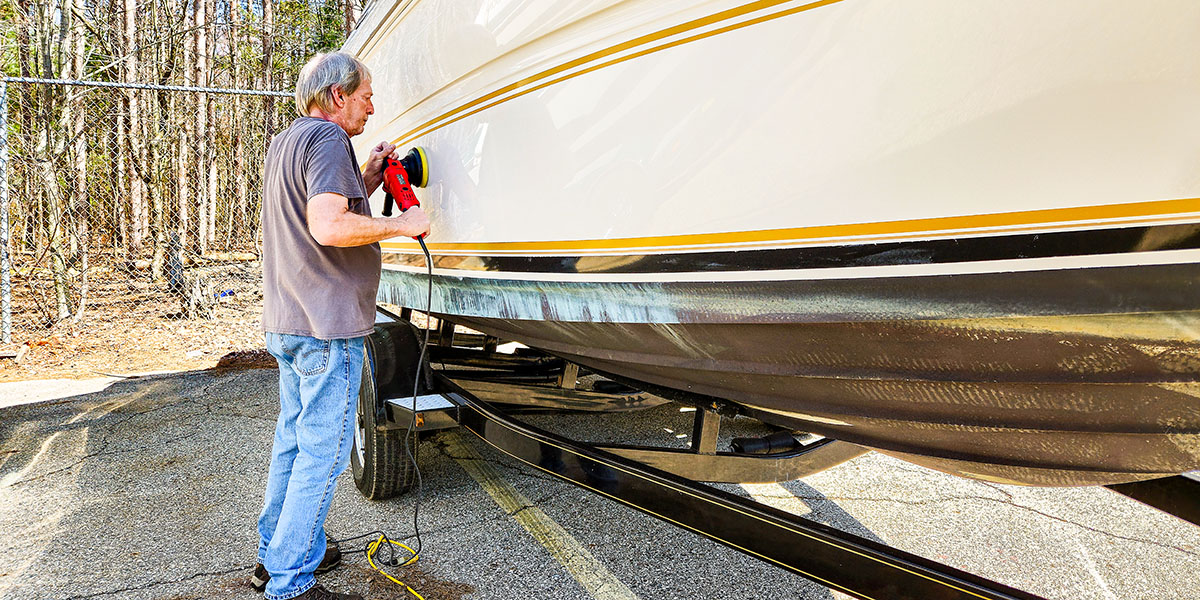
Even the best-kept boats lose their sparkle over time. Oxidation develops. Exposure to the elements softens the shine. The good news? Restoring that glossy finish is easier than you think, if you know how to buff a boat hull.
For a lot of boat owners, buffing the hull is a weekend DIY project. But what do you need to know before you start buffing? Find out how to buff a boat hull the right way.
What to Expect
Buffing a boat is hard work, so boaters should anticipate spending at least a day doing the work. For larger boats, the work may take several days, but don’t leave freshly buffed gelcoat exposed without a wax sealant.
Most do-it-yourselfers will be fine buffing an 18- to 21-foot boat, according to Chris Henderson, owner of HDMarine Detailing in Southern California. When the boat gets larger than that, many owners call a professional detailer.
Keeping Up Appearances
Buffing your boat is going to be a lot easier and faster if you keep up with regular maintenance. That means regular washing and waxing. Henderson noted that a typical wax job will only last about three months. That’s why many of his customers opt for the more expensive ceramic coating, which provides five years of UV protection.
Henderson recommends frequent quick detail treatments for high-traffic areas and to prevent water spots from baking into the gelcoat.
“I’m very (picky) about my boats and I would wax my boat before every single trip,” Henderson said. “Not everyone has to go that extreme, but I wanted to keep my boat maintained and protected.”
Tools for the Job
Buffing a boat can be physically demanding, so Henderson has an array of tools to help him get the job done. You will incur some upfront costs for the tools and products, but you will save more than that by doing the work yourself. Here’s what Henderson recommends:
- Dual-action polisher
- Rotary polisher
- Wool and foam pads
- Microfiber towels
- Marine-grade wax and sealant
- Air compressor
First, thoroughly wash and dry the boat using soap and microfiber cloths. Then park the boat in a well-shaded area and start buffing.
Work Small to Buff a Boat Hull
Approach the boat as a grid pattern. Start at the top and work downward in 3-foot-by-3-foot sections before you move to the next section. This makes it easier to keep track of areas you’ve buffed and creates natural breaks while doing the labor-intensive work.

Surface Deep
The goal of buffing is to remove the thin layer of oxidation from the gelcoat and restore the shine. Let the polisher do the work and avoid pressing too hard against the deck or hullside.
“You just want to eliminate that fine layer,” Henderson said. “That way you can refine and bring back that clarity and shine everybody looks for.”
Keep it Moving
Henderson recommends novice detailers use a dual-action polisher rather than rotary polisher, which can burn the gelcoat. Keep the polisher moving and make wide passes. Avoid repeated passes over the same area.
“A rotary (polisher) tends to get very hot, and you can damage the gelcoat if you’re not familiar with them,” he said. “A simple dual-action polisher should do the job.”
Pick a Polish
Look for a product with fillers, such as silicones, polymers, or waxes that hide and smooth out fine scratches. Henderson likes 3D Marine & RV All-in-One Compound & Polish for people learning how to buff a boat hull.
“There’s a lot of filler in there, and that will kind of distract the eye from imperfections that you may have in the gelcoat,” he said.
Use the Right Pads
To brighten the gelcoat, start the initial pass with wool pads and a compound for what detailers call “cut and buff.” The process leaves micro-abrasions, so Henderson follows up with foam pads using a quality marine polish to eliminate light swirl marks.
Keep it Clean
Foam pads and wool pads that are clogged make it more difficult to restore the gelcoat. After each pass, Henderson uses an air compressor to clear debris from the pads and keep the wool fibers open. For a 19-foot boat, Henderson will use three or four 6-inch pads.
If a pad falls to the ground, it never touches the boat.
“If you get any debris on your pad, now you’re putting that on your boat and it’s going to leave scratches to deal with,” Henderson said.
Go New
Don’t reuse pads or microfiber towels the next time you buff your boat. Instead, opt for a fresh pack. Washing pads and towels doesn’t ensure the debris is removed, so it’s best to be cautious. The old towels can be used around the garage.
Now that you know how to buff a boat hull, you just have to commit to the job regularly. Your boat will thank you even if your back and shoulders and arms won’t. But once the work is done, grab a cool drink, take a pain reliever, and admire the shine.
Gregg Mansfield
You might also like


