Has the Time Come to Refresh Your Boat’s Upholstery? Here’s How

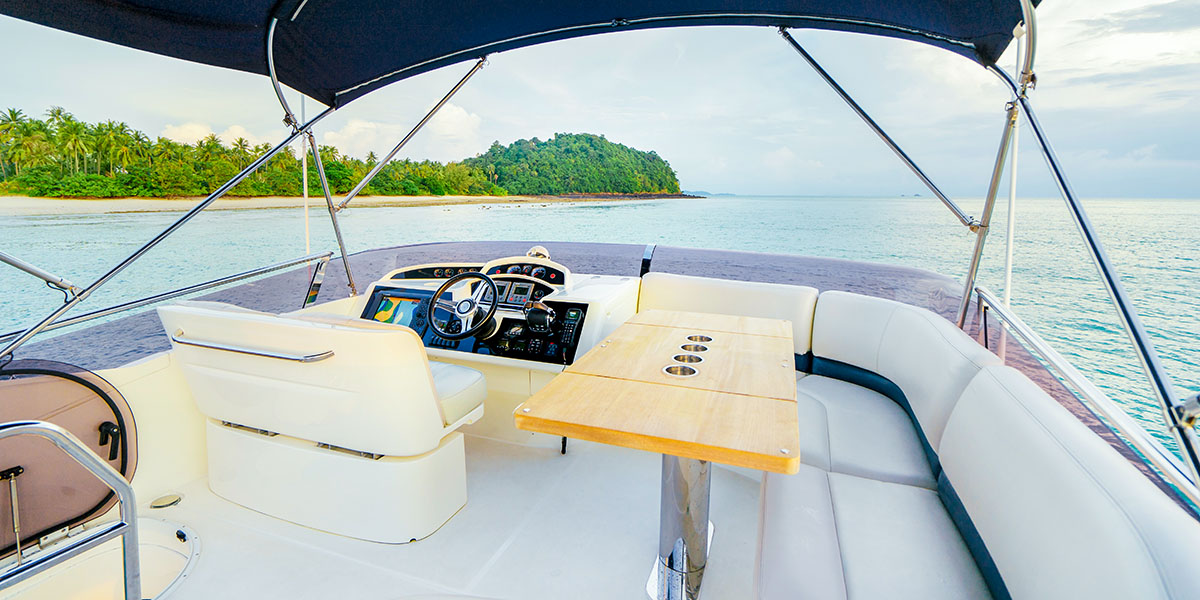
Other than neon colors and tribal graphics, nothing reveals a boat’s age faster than worn upholstery. Faded vinyl, tattered stitching, and musty stowage lockers scream old. Yet, with some scrubbing it’s still possible to turn back the clock and refresh boat upholstery.
Even with regular maintenance, a boat’s upholstery still takes a beating from the sun, salt and water. (The same applies to the woodwork.) So when is it too late to refresh boat upholstery? If it’s not too late, where do you start? What tools do you need? How can you keep it fresh once you’ve done the work?
Clean or Reupholster?
Not all upholstery can be saved, especially if the boat’s cockpit wasn’t regularly covered or maintained. The tops of bolsters and wear points on sunpads will start to crack and lose elasticity, but that doesn’t mean the boat must be reupholstered.
“When the dye leaves and it’s starting to be very brittle and it cracks, it’s no good,” said Patrick Bray, owner of Showtime Detailing in Belleville, Ontario. “If it still has color and elasticity, you can work with it.”
Tools for the Job
Doing the job right takes time, hard work, and the right tools. Bray budgets six to eight hours for a 30-foot boat. When he shows up to a job, he brings the following tools:
- Microfiber cloths
- Soft brushes or nail brushes
- Spray bottles for cleaning solutions
- Magic Erasers
- A wet-dry vacuum
When working with strong cleaning solutions, follow the manufacturer’s instructions for using eye protection and gloves. Open the windows and vents when you are working in enclosed spaces such as cabins or consoles. Bray uses a fan to disperse the fumes.
Where to Start to Refresh Boat Upholstery
Before Bray gets to work in the cockpit, he washes the boat’s exterior starting at the top and working downward, looking for any mold spots. If the cockpit is especially dirty, Bray occasionally uses a power washer to remove excessive dirt or leaves. In most cases, a light spray from a hose should do the trick.
With the exterior washed and semi-dry, Bray goes to work on the interior and deals with any mold. The spots appear to be green or brown and are more visible on white upholstery. He sprays any mold spots with Star brite Mildew Stain Remover and lets it sit for at least five minutes. He agitates the area with a small brush to remove the mold and repeats the process as necessary. Then he wipes it clean with a microfiber cloth.
He pointed out that the mildew remover works best in warm, direct sunlight.
Attention to Detail
Bray uses a combination of Spray Nine heavy-duty cleaner, soft brushes, and microfiber cloths to remove the surface grime and refresh boat upholstery. He focuses on creases and stitching where dirt can build up.
“Be careful around the stitching,” he said. “You don’t want to agitate it to a point where you tear it.”
Clean everything like you would a mirror; start at the top and work down. Use a smaller brush, pipe cleaner, or vacuum to lift dirt from hard-to-reach spots. Do not spray the cleaner directly onto any electronics. Most people start at the helm since it gets the most use and work their way around the boat.
For hard-to-remove scuffs on nonskid decks, Bray likes the Magic Eraser bar. He is sure to apply light pressure so as not to damage the surface.
Professional detailers will head into the cabin, but most do-it-yourselfers will have their hands full with the exterior. It’s better to break it into two projects, though the cabin refresh will take substantially less time.
Finishing Touches to Refresh Boat Upholstery
After he cleans the upholstery, Bray applies a good vinyl dressing or leather treatment with UV protection and lets it soak in to recondition the material. Products from the local marine store, such as Meguiar’s Extreme Marine Vinyl & Rubber Protectant, work well. You can use them for light cleaning.
“Vinyl is like your skin, it dries out,” Bray said. “So, you want to put some moisture back into it.”

Preventive Maintenance
If a boat hasn’t been regularly maintained, refreshing boat upholstery only goes so far. Simple measures can go a long way. For example, quickly clean any spots you see and hang white towels over the top of bucket seats while the boat is docked.
Bray likes to flip up the bench seat pads when the boat isn’t being used to prevent a yellow strip where the pad meets the backrest.
“Wipe regularly and make sure it’s dry,” he said. “Especially if you get splashed out on the water.”
A quality, full marine cover is best for protecting the upholstery but if that’s not an option, individual covers for the bucket seats will extend their service life.
With the right equipment and some hard work, refreshing boat upholstery can make a vessel look years younger.
Gregg Mansfield
You might also like


