What You Need to Know About Center Consoles

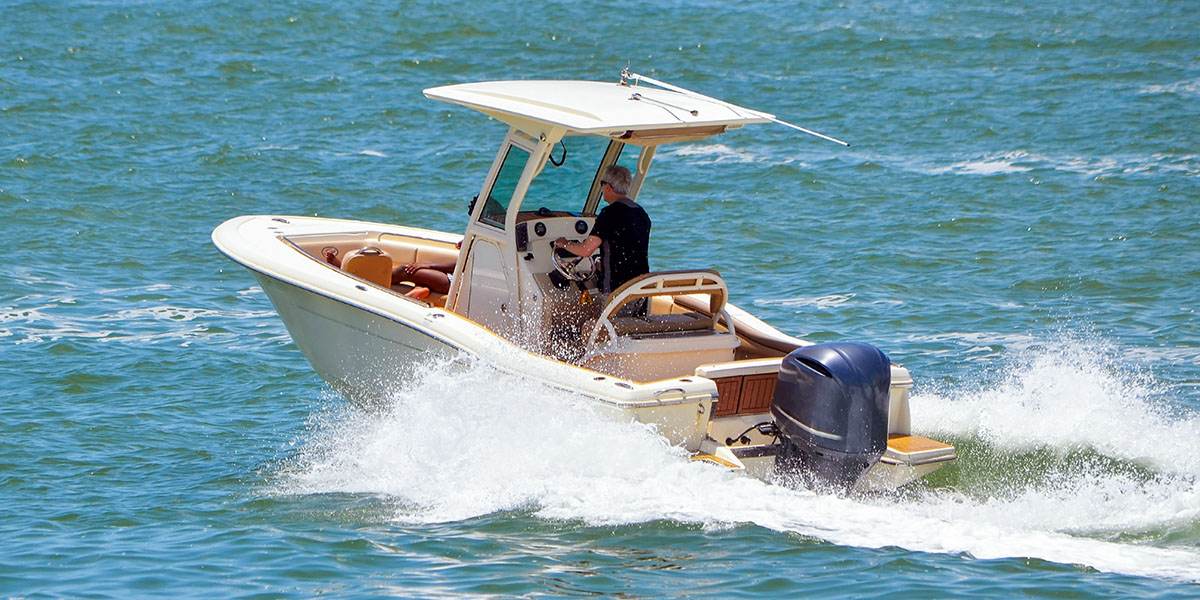
Few boat styles capture as many loyalists as the center console. Whether you’re fishing, cruising, waterskiing, or just hanging out, center consoles offer a unique layout that lends itself to a variety of applications. Though, yes, they are often considered fishing boats. But why buy a center console? What are some pros and cons an interested buyer should consider? Here’s what you need to know.
What Is a Center Console?
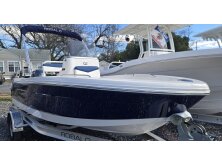
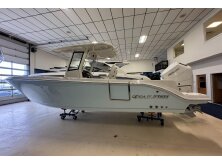
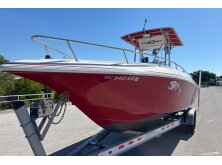
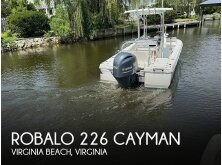
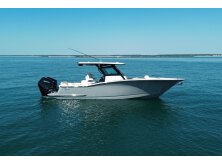
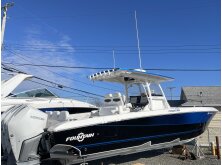
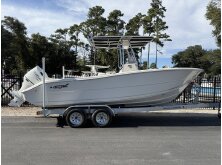
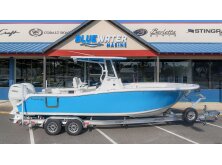
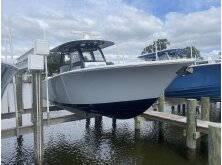
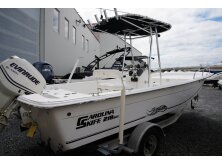
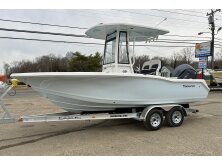
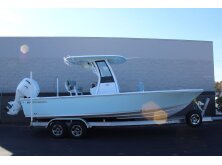
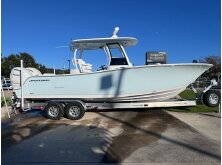
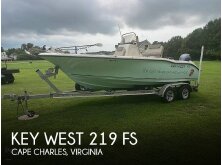
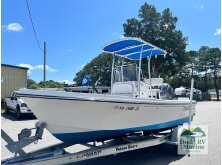
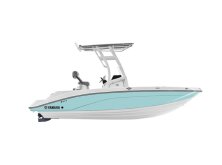
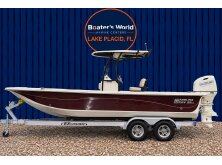
A center console is a single-deck, open-hull boat that houses the helm and the essential controls at the center of the deck rather than off to either side. Center consoles are constructed of both aluminum and fiberglass, but the latter is more common in newer models.
The design itself offers an advantage over other boats in that passengers and anglers alike can enjoy 360-degree access. That access makes it easy to move around during a day on the water. They typically range in length from 18 to 40 feet, although larger variations exist. Boat builder HCB boasts a 65-footer with 3,000 horsepower or more.
Powered by outboard motors, center consoles range greatly in power. Many use a single outboard, while the largest of them can have as many as five.

What Makes Center Consoles so Popular?
Center consoles are very popular among both first-time boat owners and seasoned mariners, due largely to their functionality and versatility. They offer 360-degree unobstructed views and fishing real estate. You don’t have to climb over the cockpit when you have a big fish on the other end of your line. They’re easy to anchor at a sandbar or along a bank thanks to their shallow draft. And they’re one of the most affordable options available for those interested in saltwater boating.
They’re also particularly stable and maneuverable, thanks to their low center of gravity and a deep V-hull design and responsive handling. Whether you’re cruising around or looking for the next fishing hole, you’ll appreciate a center console’s ability to navigate tight spaces, shallow waters, and choppy seas.
What Is the Typical Power for a Center Console?
The power for a center console depends on the size and weight of the hull itself. And the “center console” category is such a broad one—any boat with a centralized helm falls under the same umbrella.
To narrow things down to a center console somewhere in the middle in terms of length and power, let’s consider a Caymas 28HB. We’ve seen this 27-foot, 7-inch boat listed for sale with a single 400 hp outboard, a single 425 hp outboard, and twin 300 hp outboards.
Center consoles can pick up some serious speed depending on horsepower, weight, and water conditions. Most offerings with twin outboards are capable of 60 mph or more.
What Are the Primary Uses of Center Consoles?
Center consoles can be used for just about anything, but their strongest demographic is probably saltwater anglers. Sure, they have enough giddyup to tow waterskiers, wakeboarders, and tubers. But the accessibility offered by having the console in the middle of the boat really benefits hardcore sport fishermen.
Additionally, center consoles almost never have carpet like bass boats and pontoon boats do. That makes them efficient working boats that are easy to clean after a messy day of fun.

Definitely Consider a Center Console If…
A center console may be the best option for you if you don’t use your boat for a single activity. If you aren’t set exclusively on fishing, watersports, or entertaining friends and family, you’re better off going with something that gives you the versatility to do a little bit of everything. Like a center console. And if you live near saltwater and plan to do a considerable amount of fishing, a center console is probably the best way to go.
Maybe Consider a Different Boat Type If…
There aren’t many cons attached to center consoles other than their size. Most popular models are 26 feet or larger. That’s a lot to tow on a trailer from one body of water to the next. This is likely a boat that is going to live at a marina, so if you want to get mobile, consider other options. At the very least, look into smaller center console models.
Center Consoles For Sale
 David Schlake
You might also like


