What Are the Reasons for Adding Trim Tabs to Your Boat?

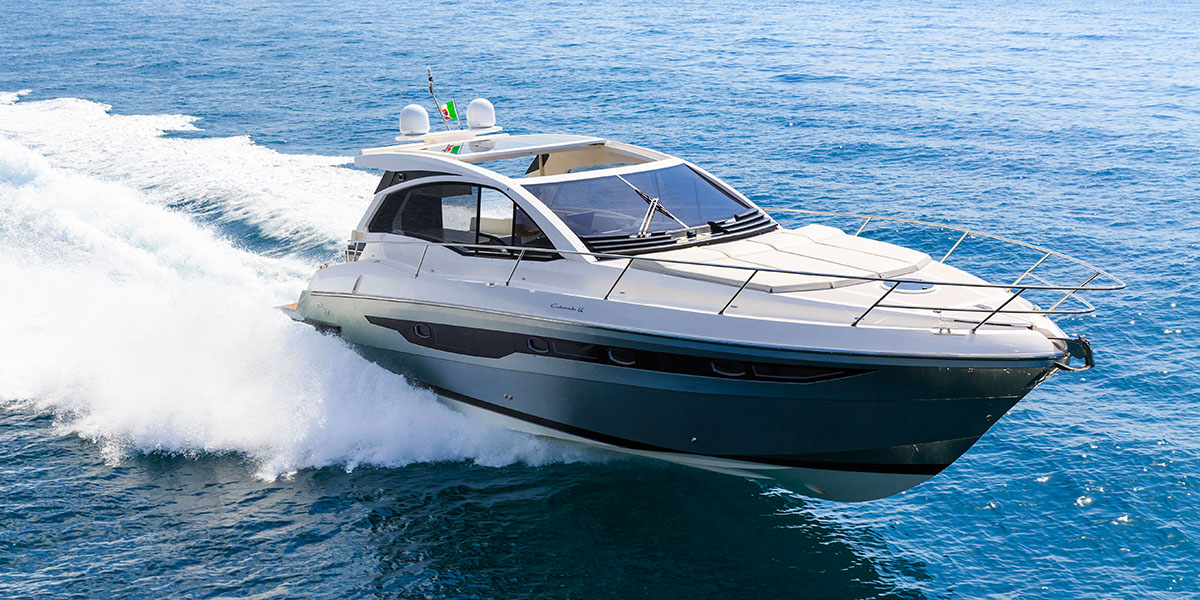
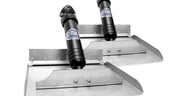
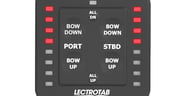
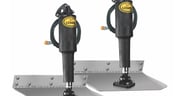
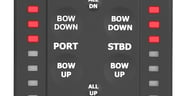
Boats often get heavier over time. When people embark, they bring many things aboard. When they debark, some of that stuff never leaves. Think wetsuits, life jackets, fishing gear, ropes, chains. There’s more. As that happens, your boat gains weight, and the factory preset running angles at all speeds are thrown off. Here’s where adding trim tabs may help with weight gain.
Trim tabs provide an efficient and effective way to control the dynamic pitch (bow-to-stern running angle) and roll (port-to-starboard running angle) of a boat while underway.
What Do Trim Tabs Do?
They are most effective on planing hulls during the planing process and when cruising. They can also be effective on slower semi-displacement hulls depending on tab design and hull type.

Trim tabs serve to minimize bow rise, improve visibility, increase comfort and fuel economy, and reduce vessel dynamic motions such as slamming and porpoising.
“For a performance boater, the main reasons would be to lower the bow and plane the hull faster, maybe because it is heavy and full of fuel,” said Tom Gongola, a product specialist at Latham Marine, a Fort Lauderdale, Florida-based trim-tab manufacturer. “Trim tabs can keep the bow under control and keep the boat flying level in rough conditions at speed. You are also able to adjust to sea conditions that cause roll or listing at speed.”
The first adjustable trim tabs were mechanical units created back in 1959. Shortly thereafter, the large mechanical actuation mechanisms were replaced by more compact hydraulic actuators with a pump installed in the boat and a switch at the dash.
How Do Trim Tabs Benefit Boats?
Adding trim tabs to a boat can help in several ways.
Optimize Speed and Fuel Efficiency
Proper trim allows the boat to ride at its most efficient angle, reducing drag and increasing top-end speed. This can result in measurable improvements in fuel economy.
Enhance Handling and Stability
Adjusting the trim can counteract listing or leaning caused by uneven weight distribution, strong winds, or rough seas. It makes the boat more stable and responsive.

Improve Visibility and Safety
Raising the bow can improve forward sightlines, especially for boats with a deep-V or stepped-hull design. Tabs also improve safety by reducing wake size and creating a better ride quality.
Reduce Porpoising
Excessive bow rise can cause an annoying and uncomfortable bouncing motion called porpoising. Trim tabs help keep the bow down for a smoother ride.
Limit Listing and Level the Boat
Trim tabs can help reduce listing, which is the side-to-side roll or tilting of the boat, and help to level loads on a boat. That’s true even if people move around or the weight distribution changes.
Trim Tab Size
The most common trim tab setups for 24- to 38-foot boats are hydraulic or electric systems with plates that are typically between 12 and 18 inches wide. The size you need will depend on factors including the boat’s weight, hull design, engine configuration, and normal load.
Reputable marine electronics and accessory retailers can help you identify the right trim tab solution for your boat.
Do-it-Yourself?

Once you’ve decided you’re adding trim tabs to your boat, the next decision is around installation. Should you tackle the installation yourself or have it done professionally? For most DIY-inclined boaters, trim tab installation is a manageable project. It does, however, require some specialized knowledge and tools.
The process typically involves mounting the trim tab plates, running the hydraulic or electrical control lines, installing the helm-mounted control panel, and integrating the system with the boat’s electrical system. If you have experience with boat wiring, hydraulic plumbing, and basic fabrication, you can likely handle the installation yourself.
However, note that improper installation can lead to issues such as fluid leaks, electrical problems, or even structural damage to the transom. So if you’re not 100 percent confident in your skills, hire a professional marine electronics installer to do the job. They’ll ensure everything is properly integrated and functioning as intended.
Are There Boat Types That Won’t Benefit?
It’s true that some boat types may not see significant benefits from adding trim tabs. For example, light, agile boats with deep-V hulls and powerful engines—many center console fishing boats fit this description—often have sufficient control authority without the need for trim tabs. In these cases, the added complexity and cost of a trim tab system may not be justified.
Conversely, heavier boats with more beam, shallower hull designs, or underpowered engines are more likely to benefit from the increased control and efficiency that trim tabs provide. Pontoon boats, cruisers, and express-style boats often fall into this category.
Properly specified and installed, trim tabs can be a game-changer for many recreational boaters in this size range. They provide a level of control and customization that can significantly improve the on-water experience. So if your boat could use a boost in performance, don’t hesitate to explore adding trim tabs.
Doug Thompson