What You Need To Know About Economy Pontoons

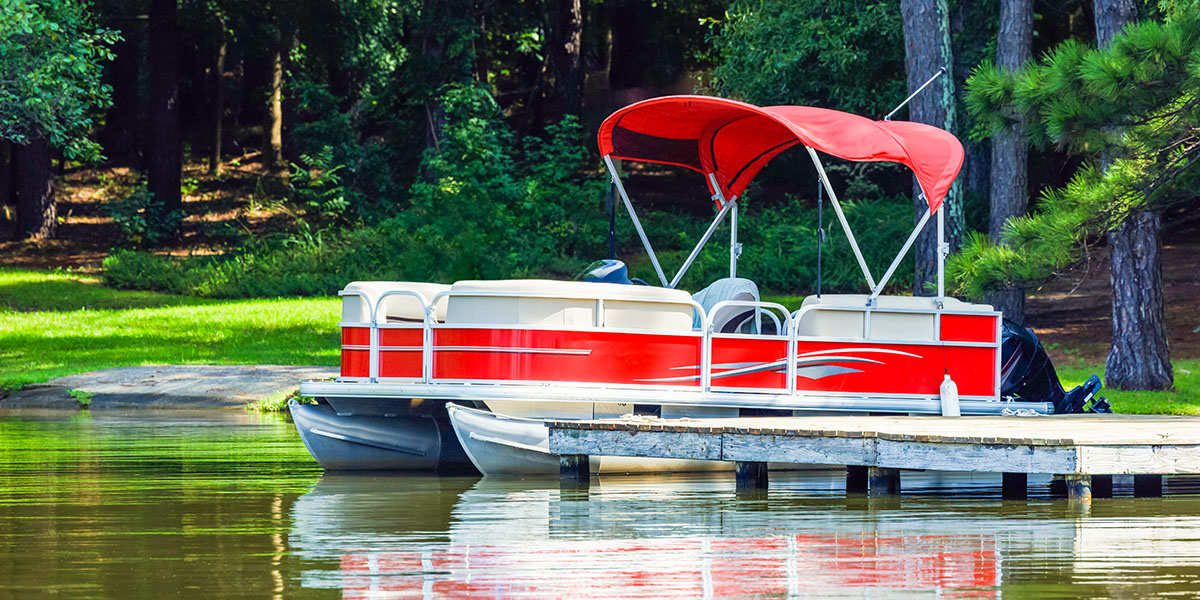
Boats exist across a spectrum of prices. Some boats have moved into the more expensive end of that spectrum and priced some folks out of that market. On the other hand, some types of boats are affordable for more people than ever before. Even retirees on a fixed income and young families just starting out can afford to get into the boating experience, especially when considering economy pontoons.
And the versatility of pontoon boats makes them a great choice for many buyers to get the most bang for their boating buck. Find out what to look for in an economy pontoon.
What Is a Pontoon Boat?
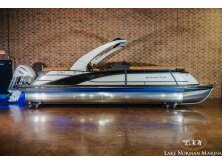
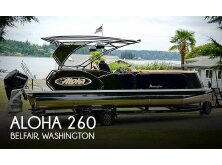
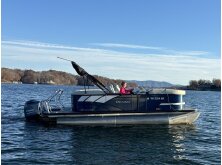
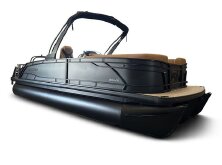
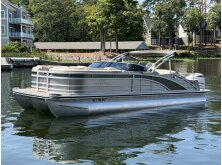
Pontoons have a rep as the quintessential party boat. The boats are typified by a pair of hollow tubes—three tubes on a tritoon—that keep them afloat. A broad deck connects them and maximizes the usable space. Pontoon owners can invite the whole gang and their plus-ones for a day on the water.
Adding to the party atmosphere is the fact that pontoons are stable, especially compared to deep-V monohulls. Imagine standing in a high wind with your legs at least shoulder width apart versus standing on one foot. A pontoon mimics the wide stance while a monohull mimics standing on one leg. (Though designers and builders have done a great job of maximizing stability in monohull boats, too.)
What’s more, pontoons ride high on the water, so they stay relatively dry. That further enhances the comfortable party atmosphere.
What Is An Economy Pontoon?
Lately, pontoon design concepts have expanded. Innovations in materials, building techniques, and plain old imagination have opened the possibilities for pontoon boats. Manufacturers have created specialized fishing, cruising, and luxury models. Some zippy little ’toons—the Sea-Doo Switch is a good example—can even hold their own in towable sports. Still others have grown to epic proportions. The Premier Escalante is a 33-foot double-decker that could host an NFL team’s starting offense and defense. It is not an economy model.
But what makes an economy pontoon affordable? That’s on you.

That is to say, the affordability comes from the buyer choosing their path wisely and knowing what they want. What are you willing to sacrifice in order to enhance another area? For instance, one consideration in affordability is, of course, boat size. You can still get plenty of high-quality boats for an affordable price, as long as you’re not wedded to the idea of entertaining the Atlanta Falcons’ starting offense and defense.
On the other hand, larger economy pontoons are available if you don’t have a need for speed or the desire to be surrounded by luxury accouterments. SunTracker offers a 22-foot Party Barge with an 11-person capacity for less than $36,000. It’s all up to you.
What Makes Economy Pontoons So Popular?
For many people, it goes beyond the price. Rather, it is their versatility that makes economy pontoons so attractive. You can find some really economical pontoons, some with a price tag south of $20,000 and many others in the lower to mid-$20,000s.
For instance, you can get a 21-footer from Lowe with more than 100 hp, space for up to 11 passengers, livewells, and fishing chairs for less than $25,000. Again, if you’re willing to forgo some of the fancier bells and whistles. On the smaller end, Sea-Doo offers a 13-footer with capacity for five people and a 130 hp jet drive for less than $30,000.

Much of the popularity of economy pontoons lies with it being such a populist boat, in that it can be virtually everything to everyone.
What Is the Typical Power for Economy Pontoons?
Have we mentioned the versatility of economy pontoons yet? Because power is another area where the sky’s the limit in terms of options. Probably the most common power type for economy pontoons is outboard motors. They’re a great fit. Inboard models do exist, though they are rare, and electric boat motors have come a long way. When it comes to power capacity, economy pontoons fall into a wide range. Some will feature a mellow 25 hp motor for when just being on a boat is enough. Those that are larger and heavier can handle 300 hp or 400 hp.
What Are the Primary Uses for Economy Pontoons?
Manufacturers have economy pontoon models aimed squarely at fishing, watersports, cruising, and more. And they offer a mind-boggling slate of options within those builds to personalize your boat. In fact, if you visit the website of almost any boat manufacturer, the “build-your-boat” feature seems like it might be almost as much fun as getting out on the water. Seemingly endless options include L-seating, fold-out beds, loungers, Bimini tops, fishing chairs, and way more. Then consider the variety of boat and engine sizes suitable for your chosen primary activity. You can create a pontoon perfect for your needs, even on a budget.
Definitely Consider an Economy Pontoon If…
Honestly, there’s an economy pontoon for pretty much anyone who wants to get into boating. Even if you’re on a shoestring budget. Make sure you have a clear idea of the kinds of activities you want to participate in, and you can create your dream boat for a price that makes you comfortable.
Maybe Consider Another Boat Type If…
The only activity that may not be best suited to the economy pontoon build is wakesurfing. It requires more power to carry extra ballast and push wake plates into the water to create a good wake. Doing that and maintaining an appropriate speed are difficult with a pontoon, especially an economy pontoon.
Anything other than that—seriously, almost anything else—and you’re good to go with an economy pontoon.
Pontoons For Sale
 Kurt Brighton
You might also like


