How Well Do You Know the Common Anchor Designs and How They Work?

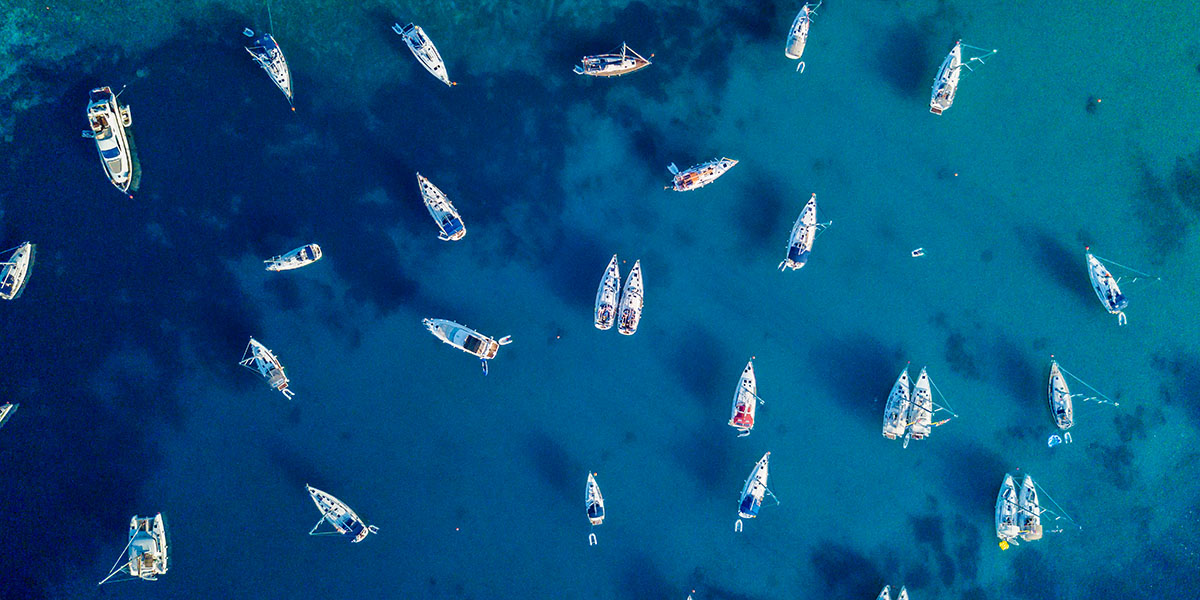
Knowing where and how to anchor is a fundamental skill for recreational boaters. Proper anchoring allows your boat to remain stationary in a desired location—whether in a protected cove with a sandy bottom or at a dive spot over rocks in the ocean. The type of anchor you use—several common anchor designs exist—can have a significant impact on your boat’s holding power and the overall safety and stability of the vessel.
Galvanized steel, stainless steel, and aluminum are popular anchor materials. Galvanized steel costs less and the zinc coating prevents corrosion. Stainless steel is made with chromium that forms an oxide layer that prevents rusting. Aluminum is lightweight and corrosion resistant.
Boatmart has a roundup of the common anchor designs and how they work.
1. Plow Anchor
The plow anchor is one of the most popular choices for recreational boaters, and you’ll often see these anchors on rental boats. This anchor features a long, narrow shank with a large, curved plow that digs into the seafloor, providing excellent holding power in a variety of bottom types, including sand, mud, and gravel. Plow anchors are known for their reliable performance and are widely used on both small and larger recreational boats.
2. Fluke Anchor
The fluke or Danforth anchor is another widely used anchor type for recreational boats. It features two long, sharp flukes that are designed to penetrate the seafloor and grip the bottom firmly. Fluke anchors are particularly effective in soft, muddy, or sandy bottoms and have top-notch holding power. They are commonly used on small to medium-sized boats and are often chosen for their compact size and easy storage.

3. Mushroom Anchor
The mushroom anchor is a specialized type primarily used in calm, protected waters, such as marinas and sheltered anchorages. It features a rounded, mushroom-shaped design that rests on the seafloor, creating suction and holding the boat in place. Mushroom anchors are typically made of steel and even cast iron, and are best suited for use in soft, muddy bottoms, where their low-profile design allows them to embed easily.
4. Grapnel Anchor
The grapnel anchor, also known as a claw anchor, is a versatile choice. It features multiple curved, claw-like prongs that can grip a variety of bottom types, including rocky or uneven surfaces. Grapnel anchors are often used on canoes, kayaks, or smaller boats, as their compact size and lightweight design make them easy to handle and store.

They are particularly useful in areas with unpredictable or changing bottom conditions. They are not effective for long-term anchoring, and can also be difficult to retrieve.
5. Spade Anchor
The spade or brand-name Rocna anchor is a variation on the plow-style anchor, featuring a sharp fluke and a roll bar.
Comparing the plow area, the spade is sharper than a traditional plow. The design allows for the leading edge to dig more effectively into the seafloor for a deeper holding style. The roll bar device functions to keep the anchor properly oriented when setting. This style of anchor costs more than others. Due to the roll bar and longer fluke, it can be more difficult to store.
6. Scoop Anchor
The scoop anchor is a unique design that combines elements of fluke and grapnel anchors. It features a curved, scoop-shaped body with multiple prongs that can grip a variety of bottom types. Scoop anchors are often chosen for their versatility. The scoop anchor is one of the common anchor designs that performs well in both soft and hard bottoms, so it is a popular choice for recreational boaters.
7. Claw Anchor
The claw anchor is also known as the Bruce anchor, named after its inventor, Bruce Hanselmann. This is a specialized anchor well-suited for use in rocky or uneven seafloors. Its distinctive curved, claw-like design is engineered to dig into the seabed and provide tremendous holding power. Bruce anchors are often used on larger recreational boats, such as sailboats and motor yachts, where their reliable performance is valued.
Each of these anchor types has unique advantages and is suited for different boating conditions and seafloor types. When choosing an anchor for a recreational boat, consider the following:
- The size and weight of the boat
- The typical anchoring conditions in the area
- The overall holding power required to keep the vessel securely in place
By selecting the right anchor type from among the common anchor designs, captains can ensure the safety and stability of their vessels. That’s true whether they are moored in a marina full of other boats or anchored in a remote, idyllic cove.
Doug Thompson