Here’s What You Should Know About Pontoon Boats

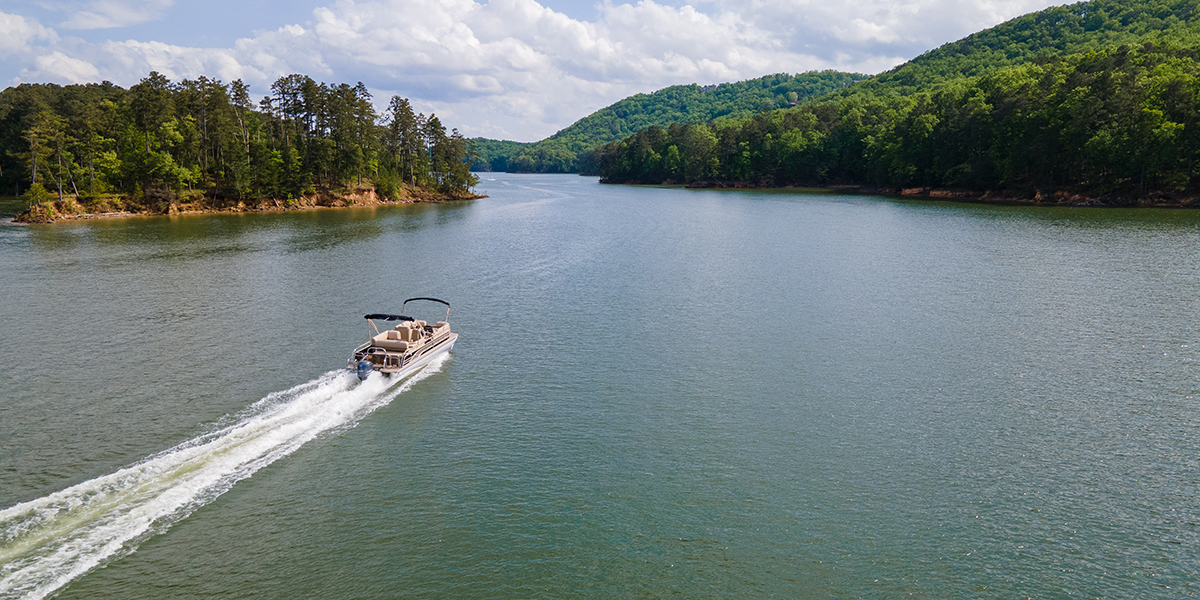
Ever since early humans first crafted a dugout canoe, boating and human ingenuity have gone hand in hand. Modern technology has led to the development of a boat type for every type of boat owner, every type of water, and all types of conditions.
Here, Boatmart takes a detailed look at pontoon boats. What makes them unique? Which activities are they good for—and not good for? What are some of their pros and cons?
What Is a Pontoon Boat?
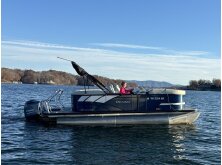
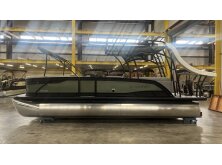
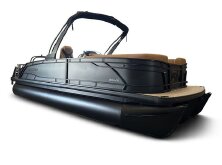
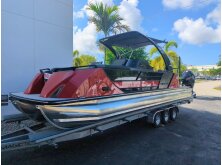
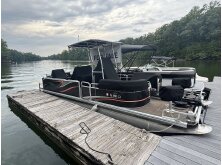
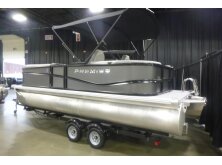
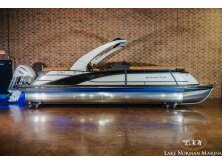
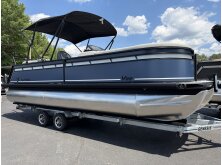
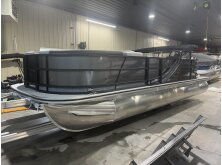
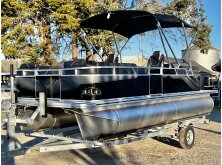
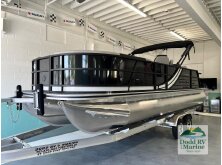
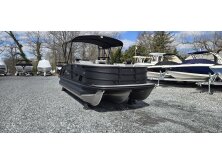
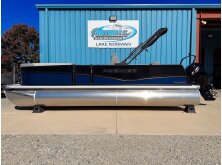
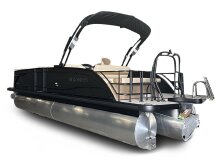
Pontoon boats are distinctive due to their pontoons. Those are the hollow tubes that run beneath the deck—the deck is attached to them—and keep the vessel afloat. Most pontoon boats have two of these tubes, but some models have three pontoons. This is a very stable watercraft design that rides low to the water with the deck sitting just atop the pontoons. Think of a pontoon like a sealed plastic bottle floating on the water. The bottle is difficult to puncture and sink. So are pontoons. They offer a stable ride for cruisers and fishing fans alike.
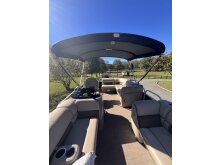
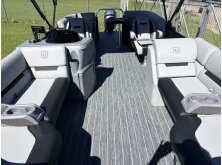
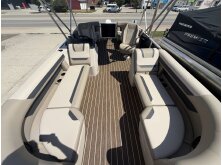
Durable walls, aka fencing, surround the interior of a pontoon at the edges of the deck and keep passengers safely inside. Passengers access the boat through one or more gates in the fence. And for their comfort, sofa and/or lounge seating often rings the interior of the pontoon. Depending on the model, a collapsible Bimini top provides shade. On others, wet bars or small galley consoles store refreshments and beverages. What about owners who want to catch and cook their own meals? Well, grills are standout features aboard some pontoons.
What Makes a Pontoon Boat Stand Out?
Like a catamaran, a pontoon boat’s tubes create the unique profile of a vessel that looks from afar like it’s on rails. Pontoon boats are notable for offering tremendous stability and the most usable deck space possible in relation to the size of the boat. Some pontoon boat designs even allow the deck space to extend outward past the “hull” or pontoons. Even more room to enjoy your time on the water.
What Is the Typical Power for a Pontoon Boat?
Pontoon boats aren’t typically known as speed demons. But don’t tell that to Brad Rowland. More on him later. They are heavy and bulky and require a decent-sized outboard engine just to chug along at a languid pace. However, advances in design, tube shape, and materials have allowed manufacturers to push the envelope in terms of speed and maneuverability.

While the most common use for a pontoon boat is likely to be either cruising or fishing, some models on the market—the non-souped-up ones—can reach speeds suitable for watersports. Models designed for fishing might come with an outboard between 60 hp and 100 hp, with typical speeds of 18 to 25 mph. However, some models are equipped with multiple outboards that provide 300 hp to 600 hp, and they can easily reach 60 mph.
What Are Pontoon Boats Used For?
Again, it depends on the model, but the most common uses for a pontoon boat are fishing and/or cruising. Builders also make sure pontoons span a range from economy to luxury. The large open decks are ideal platforms for swimming and diving in calm waters, as well as for walking around if a fish swims under the boat. Design innovations in recent years have allowed conversion between these two uses, meaning you can switch out chairs for loungers. Double-decker pontoon boats allow for a sundeck above and even sleeping quarters, a galley, a head, and a shower.
What Is Something Unexpected About Pontoon Boats?
Probably the most surprising pontoon boat fact for those unfamiliar with the boat type is this: Some genuine speed-demon models exist. A market-available, sleek, aerodynamically designed pontoon boat blasting along the water at 65 mph is a sight to see. But believe it or not, modified pontoon boats with triple outboards regularly break the 100-mph barrier. The aforementioned Rowland has pushed his South Bay triple-tube, triple-outboard pontoon—900 hp in all—to 114 mph on a couple of occasions at the Lake of the Ozarks Shootout.
Consider a Pontoon Boat If…
If your primary goals are easy-going fishing, cruising, swimming, or sunbathing, a pontoon boat is a great choice. You can even participate in some low-key waterskiing or tubing on calmer waters as long as you choose a model with at least 90 hp. Their abundance of deck space and flat, low-to-the-water profile make pontoon boats good fits for the following kinds of boat owners:
- People who like to fish
- Less-active people
- People with children
- People who might have mobility issues
- Anyone who just wants an easy, relaxing day on the water

Consider a Different Boat Type If…
While modern pontoon boats can go faster than in years past, that’s not their forte. If you have a need for speed, you’re better off shopping for a different model. Also, if you plan to go boating on rough water frequently, pontoon boats are not the right choice. They are remarkably stable on calm water or small waves, but on larger waves, they often take a beating.
Conclusion
Overall, pontoon boats are a fun, safe, very stable boat type. Pontoons are made for fisherfolk, day cruisers, and boaters who seek fun in the sun and even low-key watersports. Just keep to the calm areas and don’t count on too much speed—unless you have a date with the Lake of the Ozarks Shootout—and you’ll have a great time on your pontoon.
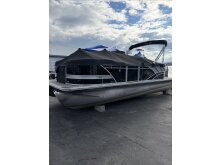
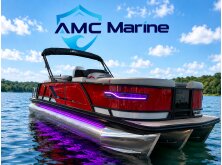
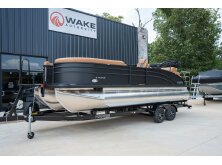
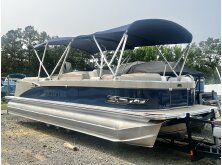
Pontoon Boats For Sale
 Kurt Brighton
You might also like


