Boating Season is Over: Tips to Winterize Your Boat

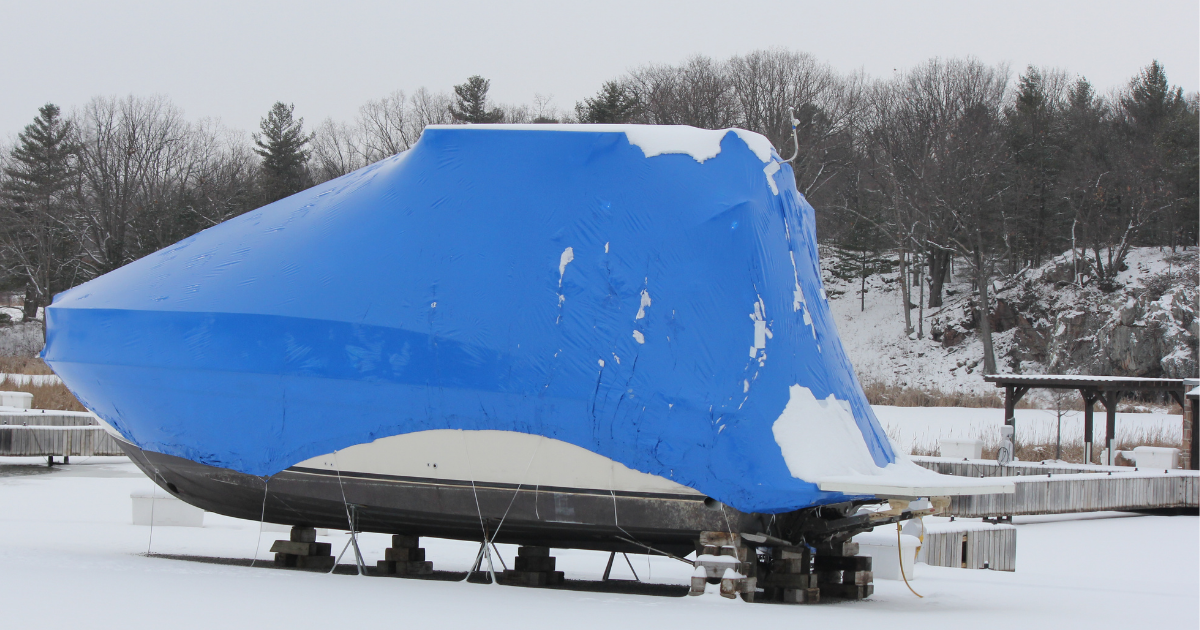
If the weather has started to get that familiar chill in the air, we may be approaching the end of boating season. Time to pack up the fishing rods, skis, and get your boat ready for the winter ahead. In order to prolong your boat’s life, it’s a good idea to winterize your boat at the end of every boating season. Regardless of how you store it over the colder months, your boat needs some protection to prevent damage over winter. Read on for some tips to get your boat ready for hibernation.
Deep Clean Inside and Out
Before you store your boat for the season, it needs a good cleaning. Start by removing anything of value from your boat. This includes swimming, diving, or fishing gear. Don’t forget to clean out any food or drink in the boat, especially anything that’s perishable. If you haven’t done it yet, remove any cushions or pillows and give them a good cleaning and then store them in a safe, dry space. Once you’ve emptied your boat of valuables, food, etc., you can deep clean it with soap and water, making sure to remove any debris or barnacles, or other plant life that may have hitched a ride on the outside of your boat. Wipe down the baseboards, seats, and wash the deck. Once it’s dry you may want to wax the boat as well.
As you clean, this is also the perfect time to fully inspect it for any repairs that need to be made before it goes back in the water next spring. Be sure to inspect and clean all of the life jackets on board as well, looking for signs of wear and tear. Clean them with mild soap and water, make sure to let the life jackets dry completely for storing them away. If you aren’t sure if they need replacing, contact the USCG or Life Jacket Association. When in doubt, replace them.
Winterize the Engine and Fuel System
Refer to your owner’s manual or the manufacturer to determine the specifics for your type of engine, whether it’s a sterndrive, outboard, or inboard engine. Each manufacturer may have different steps and methods to winterizing, but we’ve collected some basics to get you started.
- Rinse the engine with water and let it drain. Then wash the engine with mild soap and water, being sure to follow up with a thorough rinsing.
- Remove the battery and store it somewhere dry and secure. Now is also a good time to make sure the battery is fully charged.
- Now is also the best time to check and change out the oil as well as fogging the engine cylinders. Using marine grease, lubricate the grease fittings. While you’re at it, change the fuel filter. Don’t simply take the fuel/water separator out, turn it upside down and pour out the water and then reinsert it. Take the time to change the filter. You’ll be glad you did.
- You should also flush and drain the cooling system, ensuring there is no remaining coolant. Once you’ve cleaned the cooling system, run an antifreeze that contains Propylene glycol through the cooling system.
Winterize the Plumbing
If you have any kind of freshwater system, you’ll need to completely drain all tanks and flush with nontoxic antifreeze. In some cases, this means you’ll need to turn on all the faucets and let them run until the tank is dry. Close the faucets and add antifreeze. Next, you’ll reopen the faucets one by one and allow some antifreeze to run through. Do this for each faucet and if you have a hot water heater, you’ll need to repeat the process for the hot water heater as well.
Don’t forget to pump out any holding tank(s) and run antifreeze through it as well. Lastly, if your boat has a portable toilet, be sure to remove it and empty it. You can thank us later. Think about it this way, if there is any part of your boat that holds water, it needs to be drained. This includes the bilge. If your boat has a Livewell and raw water washdown, those should also run until they’re dry too. Depending on whether or not you store your boat in or out of water for the winter, you’ll want to consult the owner’s manual and manufacturer for specifics.
Finally, if this is your first winterizing, reach out to a fellow, experienced boater. We’re here to share knowledge. If you don’t have someone available, call a professional and let them do the job. Now that you know the ins and outs of winterizing your boat, you can be sure to protect your investment in all types of weather. You can count on Boatmart for helpful information before and after you purchase your boat!
kyle
You might also like